All I’ve ever made since starting this hobby are control bots and to be honest I’m sort of getting to the point where I want to start branching out to some more destructive designs. That being said I would like to keep one control bot around to bring out to comps to alternate with whatever future spinner I decide to make. With that in mind, the big question is which one??? All of my robots are basically designed to be tanks with a weapon essentially strapped on afterwards which has worked well for me so far, but I think its about time for the weapon to take centre stage.
Grab and Lifts are to me the most exciting style of control bot to watch, especially those capable of large overarm flings, Derive from Broken Link Robotics being the main example. This will hence be my chosen weapon type.
After many hours of CAD this was what I ended up with.
The Robot
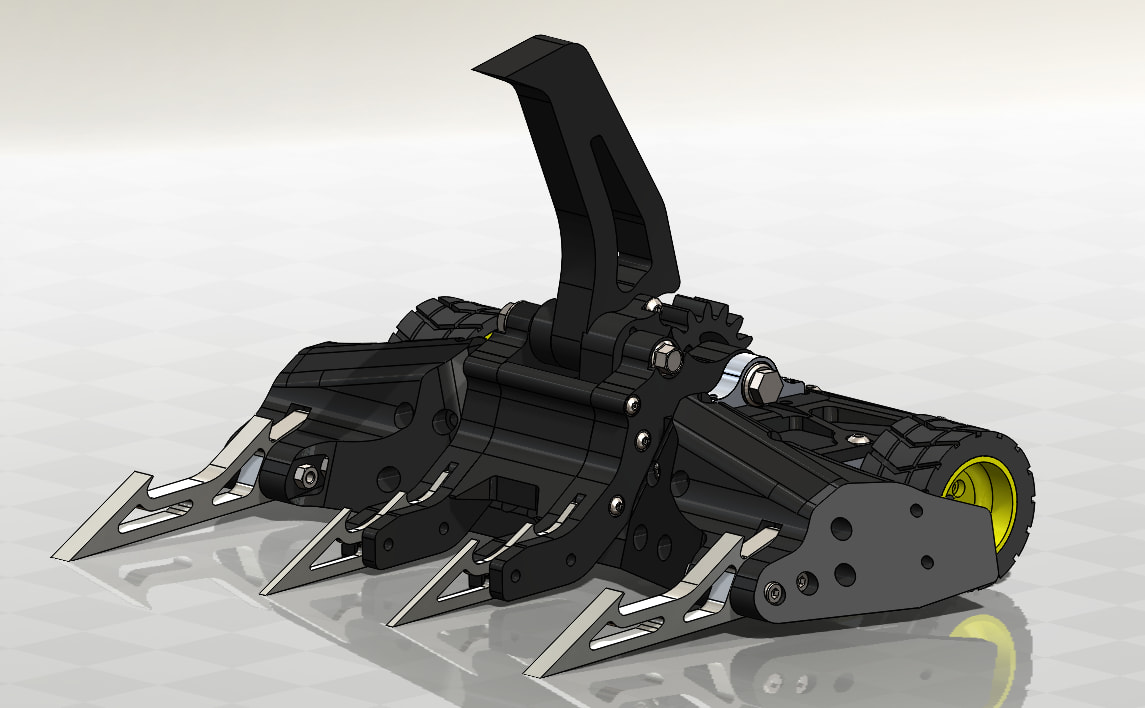
The Sawblaze style of grab and lift is by no means a new concept, with notable examples such as Fracas and Barghest being run in the featherweight scene. I was a bit apprehensive about running a 2wd control robot, but it does align well with the whole minimal maintenance vibe I’m aiming for, with no need for additional drive system elements such as belts and pulleys. It also reduces the amount of tyres to cast which is an absolute bonus in my book. Overall since the majority of the weight distribution would be spread over the wheels vs the front forks, and current 2wd robots like Schism, Dolos and Chucky seeming to drive decently, I didn’t think it would be a problem.
Weapon Assembly
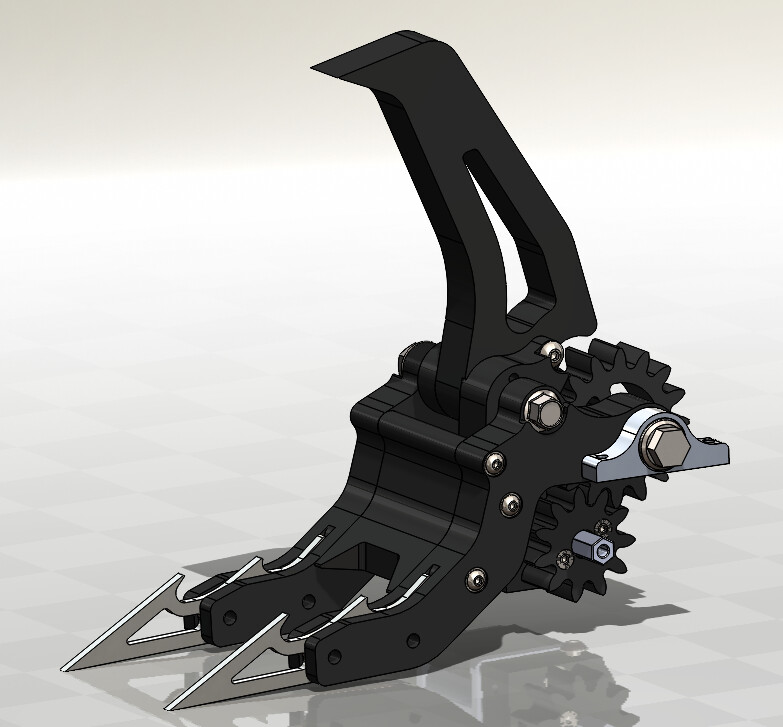
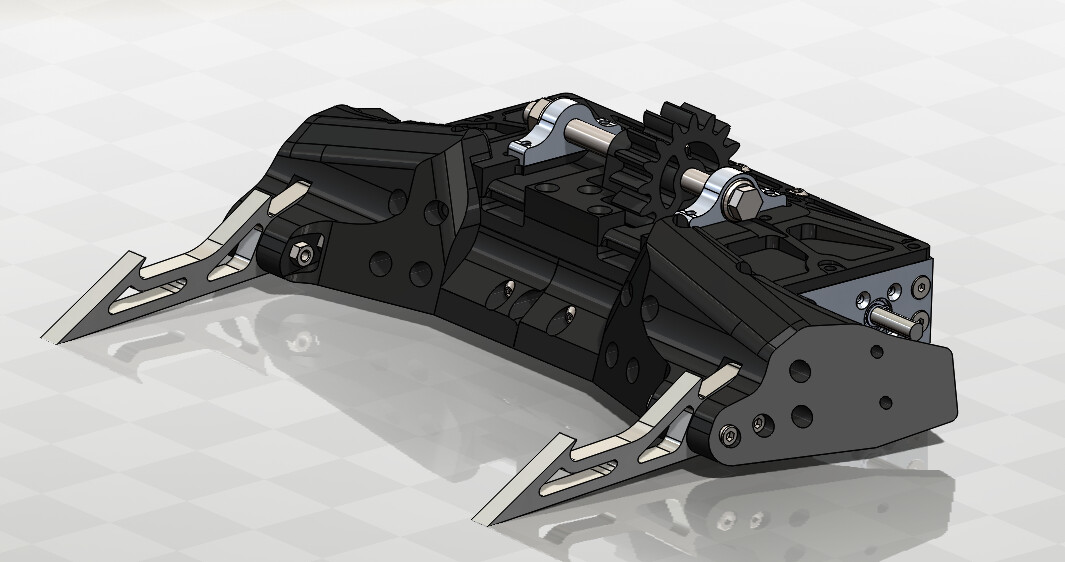
Since the lifter is likely to take some fairly large impacts, I was quite determined for the assembly to be made of TPU in order to comply with these loads as opposed to resisting them. The lifting arms are 100% infill to get a good balance between rigidity and flexibility with the 3mm HARDOX fork placement restricting large arm deflection in the vertical direction to allow for an effective lift. The claw is machined from HDPE mostly for weight savings.
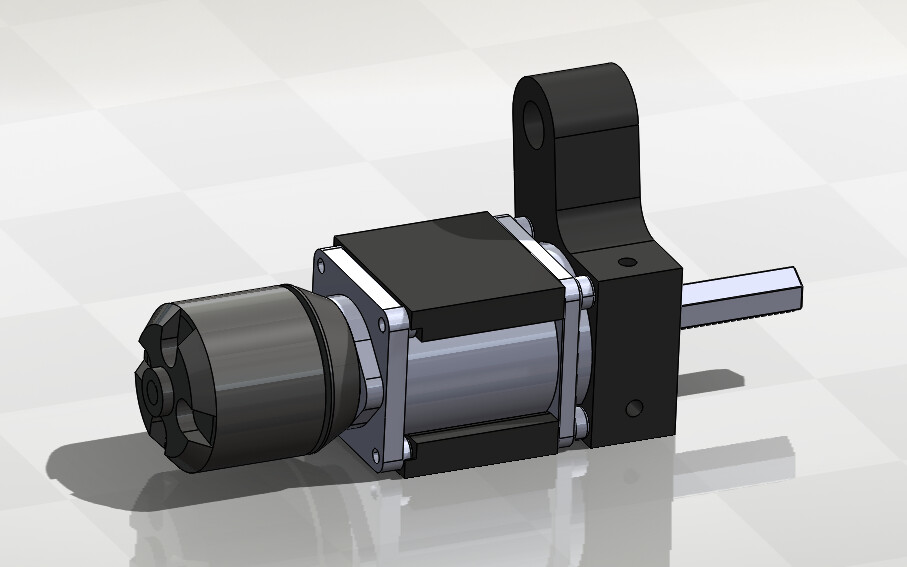
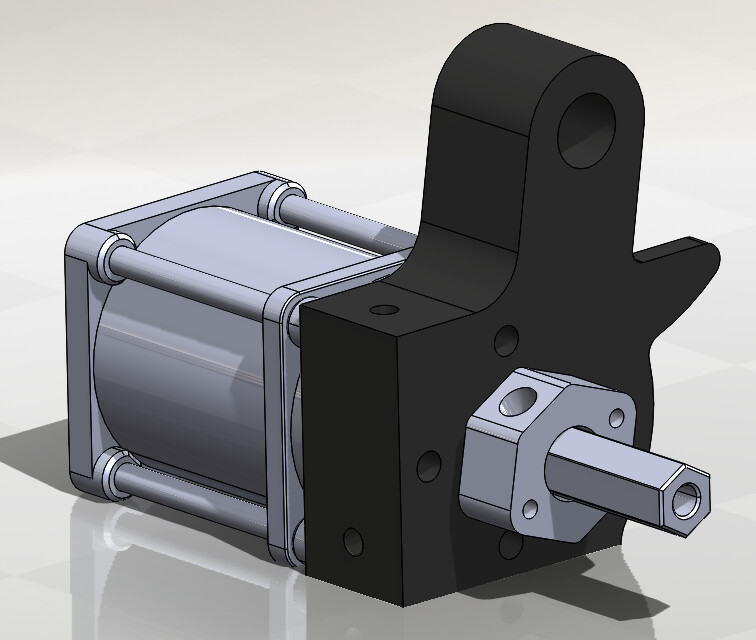
The weapon assembly is powered by an 880kv 2836 4s brushless motor paired with a 51:1 Repeat Ultra gearbox. An additional 3mm 6082 plate was manufactured to attach the motor to the gearbox due to the motor shaft being too long. You could argue I should have just trimmed the shaft and you are likely right, but it seemed less problematic this way and if I ever needed to replace the motor, no additional work would be required. An additional stage of external reduction was done to increase it to 75:1 to ensure plenty of torque was available for the lifts.
The pinion is attached to the gearbox shaft via a custom 8mm 6082 hub, with 2 tightened M5 flat grub screws either side.
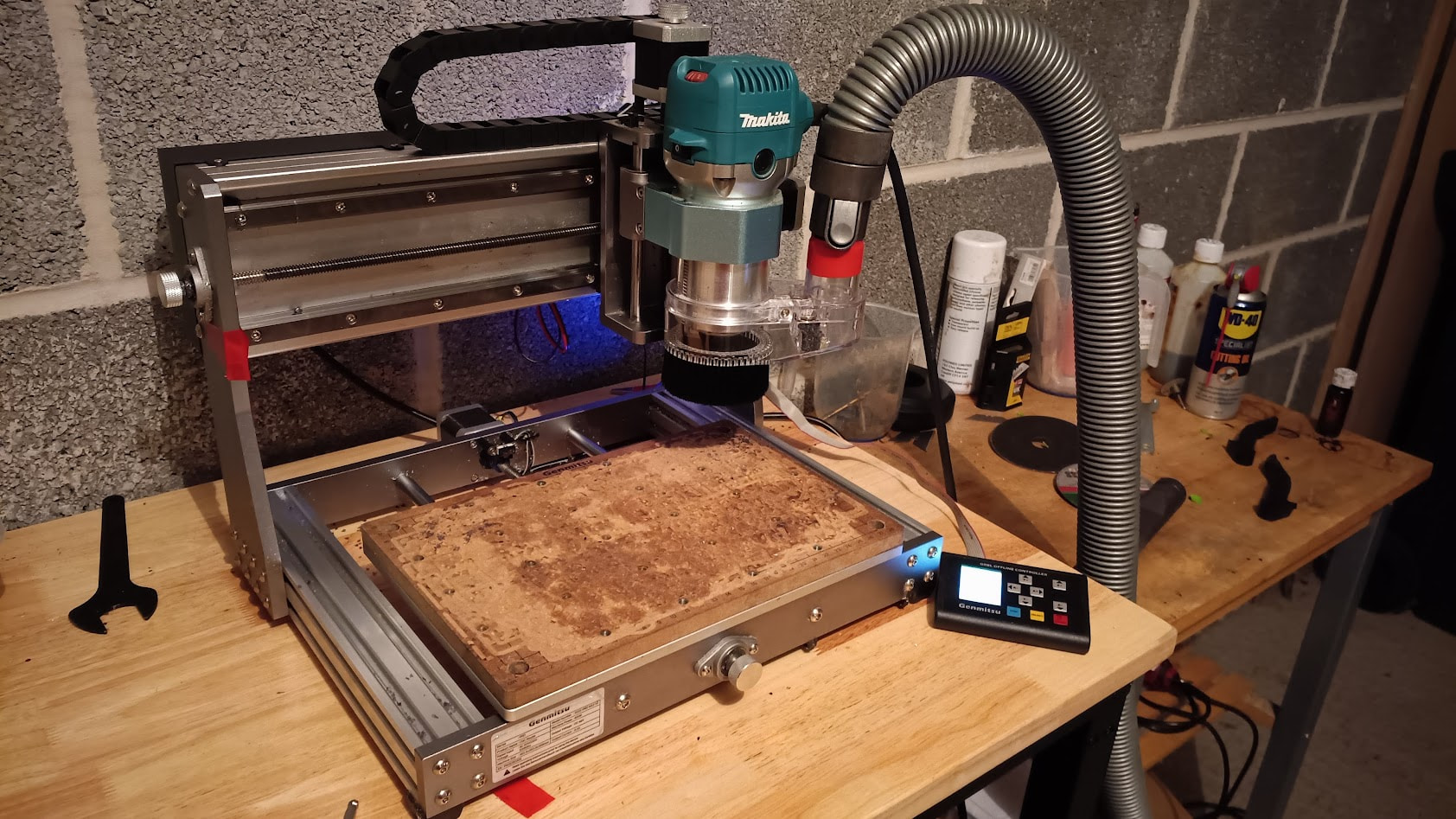
The gears are mod 2.5 and machined from Nylon 6. Nylon 6 is an absolute bitch to machine due to piss poor heat dissipation, but it is incredibly resilient compared to HDPE so well worth the horrific experience. I have recently upgraded my CNC to allow for a vacuum attachment which ensures the chips are evacuated so they cannot bind to the stock, making the experience a little more tolerable.
Chassis Assembly
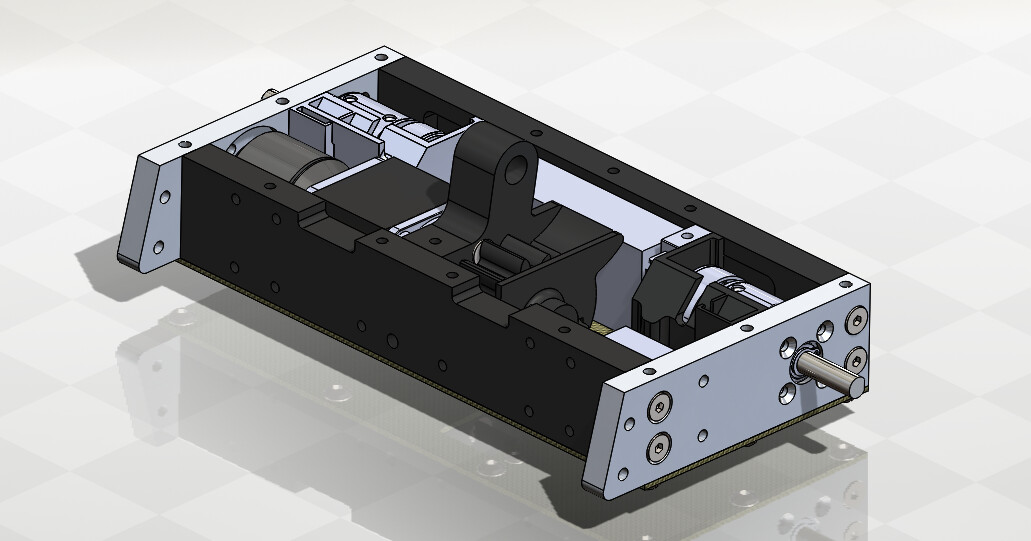
The chassis is constructed from the usual 8mm 6082-T6 for the side rails and 10mm PE500 for the back and front panel. The bottom panel is 1.5mm carbon fibre which was outsourced to CNC Madness since I value my lungs, and the top panel was machined from 10mm PE500.
The lifter assembly is mounted to the chassis via 3 separate mounting points and an M8 Gr5 Ti bolt. The bolt passes through 2x 8mm 6082 mounts bolted to the 10mm PE500 top panel, and through the 15mm PE500 gearbox assembly mount which is bolted to the front, bottom and top plate. I didn’t fully trust the 6082 mounts to take the full lifting load alone since this would rely entirely on the rigidity of the top plate. Allowing the shaft to go through the motor mount means that a large portion of the reaction loads are taken by the rest of the frame through the mounting screws, easing the loads on the top PE500 plate.
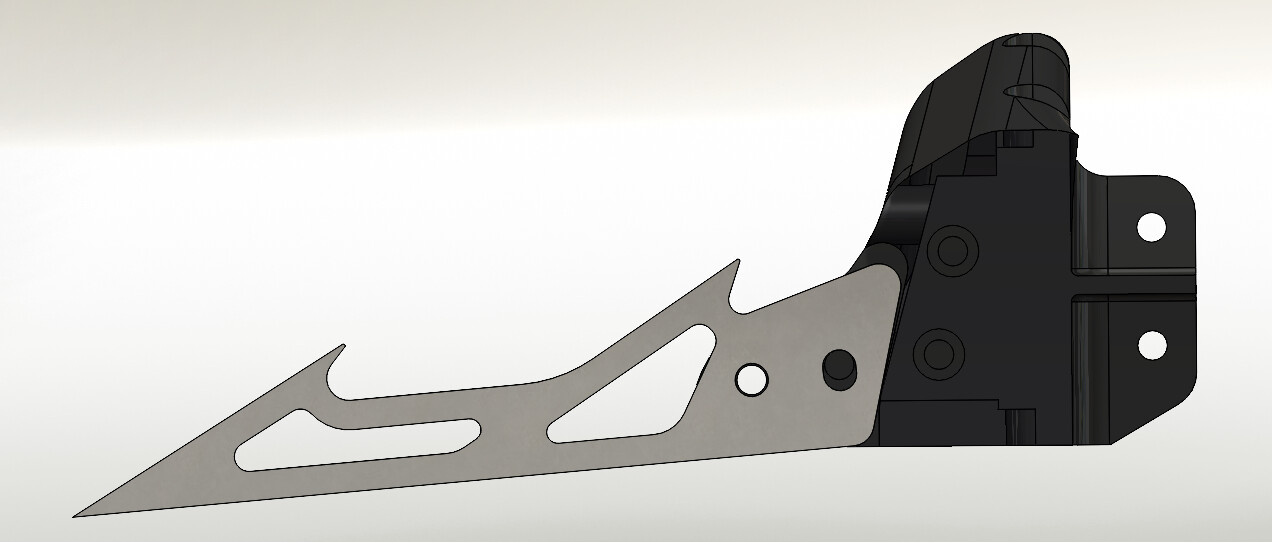
The front 8mm HARDOX fork mounts are printed in TPU, with the forks being bolted to them via 2 m4 bolts. A slot has been used for the outer attachment bolt to allow the fork to pivot around the inner bolt. This is to allow the forks to move downwards if wheelying was to occur, something I’ve seen Jack Tweedy’s robot Schism account for.
The Wheels
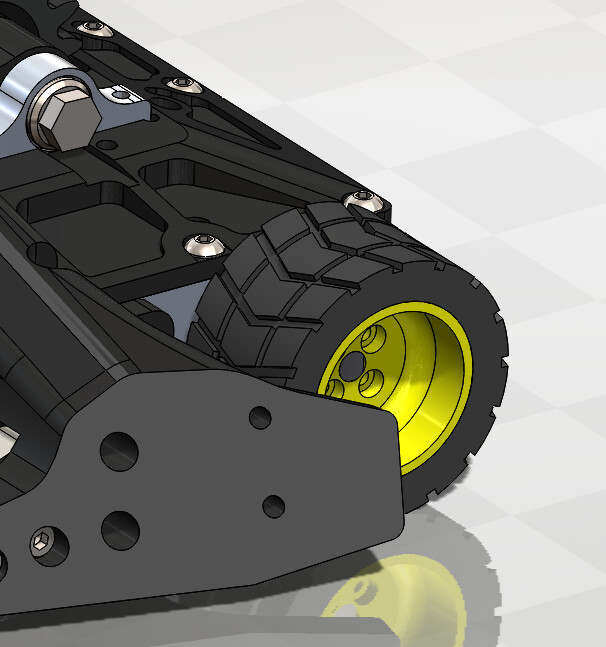
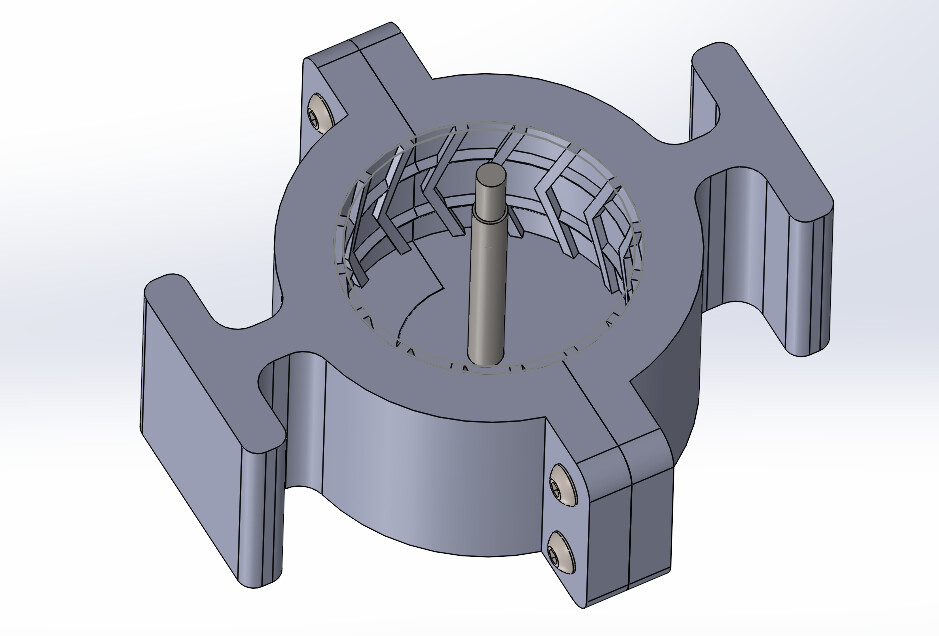
Since I was only running 2wd I thought I’d treat myself to some treads because they are neat, even if they don’t end up adding any functionality. After seeing Tom Lloyd’s video and seeing how he used a 2 part mould I thought I’d do the same. The tread pattern is modelled on the inner circumference of the mould which is then split into two parts. To ensure an easy extraction I added 2 handles either side of the mould just so I can pull them apart.
The electronics are as follows
Drive Motors - 2x Repeat Max v2
Drive ESC - Repeat Dual Brushless AM32 ESC
Weapon ESC - Ranglebox 30A Brushless AM32 ESC
Battery - 380mAh 4s LIHV
Receiver - 4 Channel AFHDS 2A
After about 3 weekends of work, I finally ended up with the final product
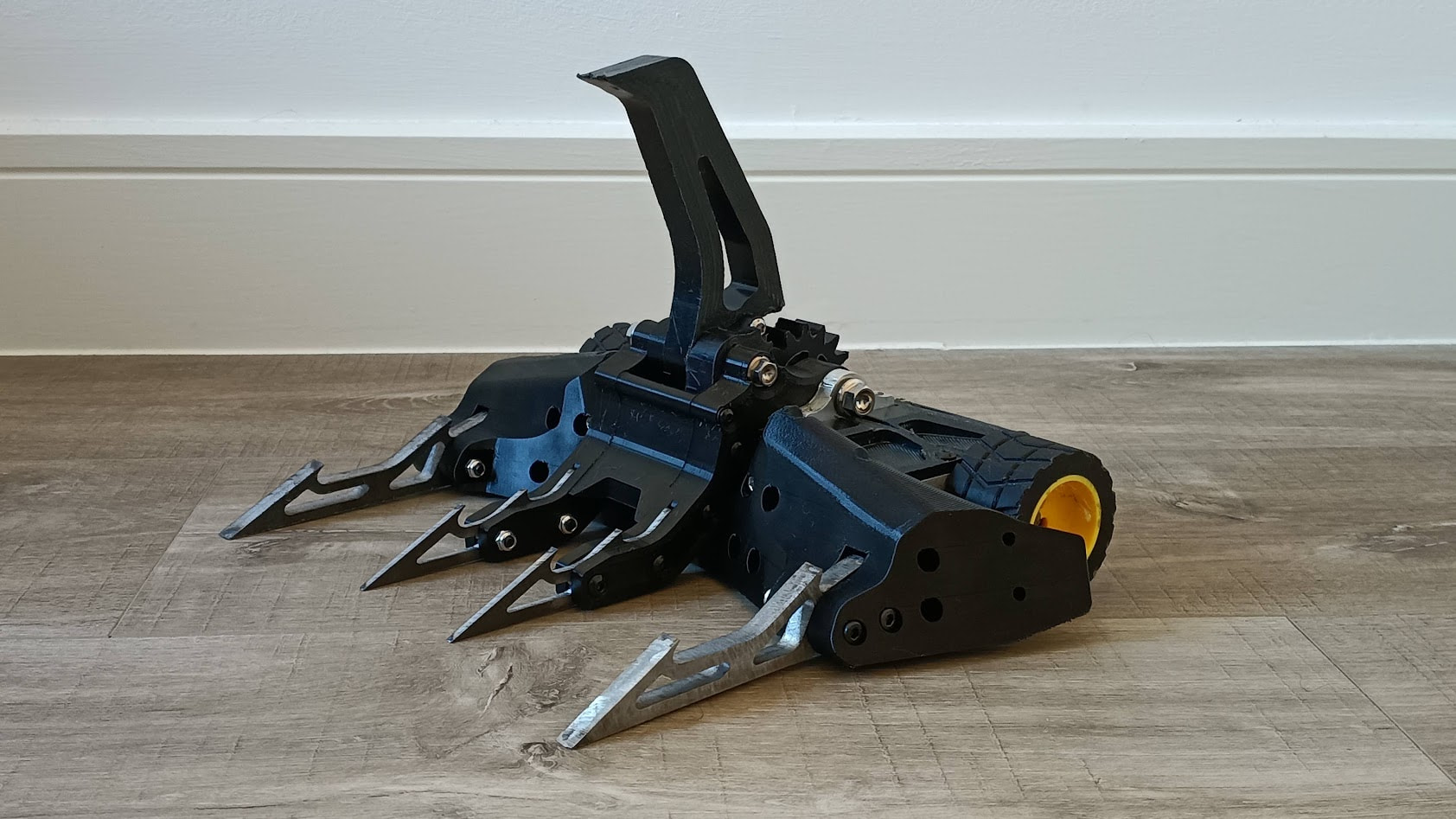
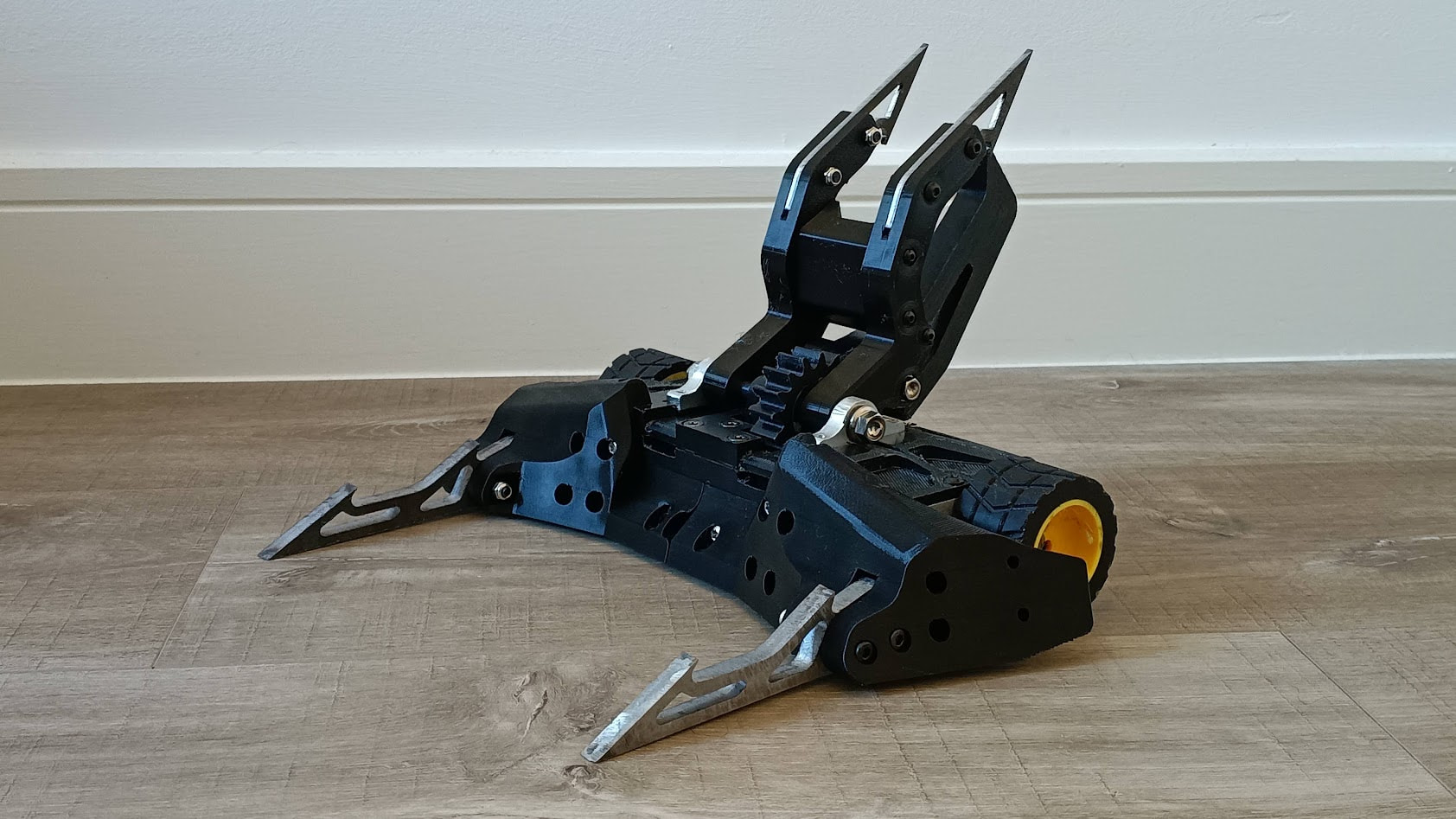
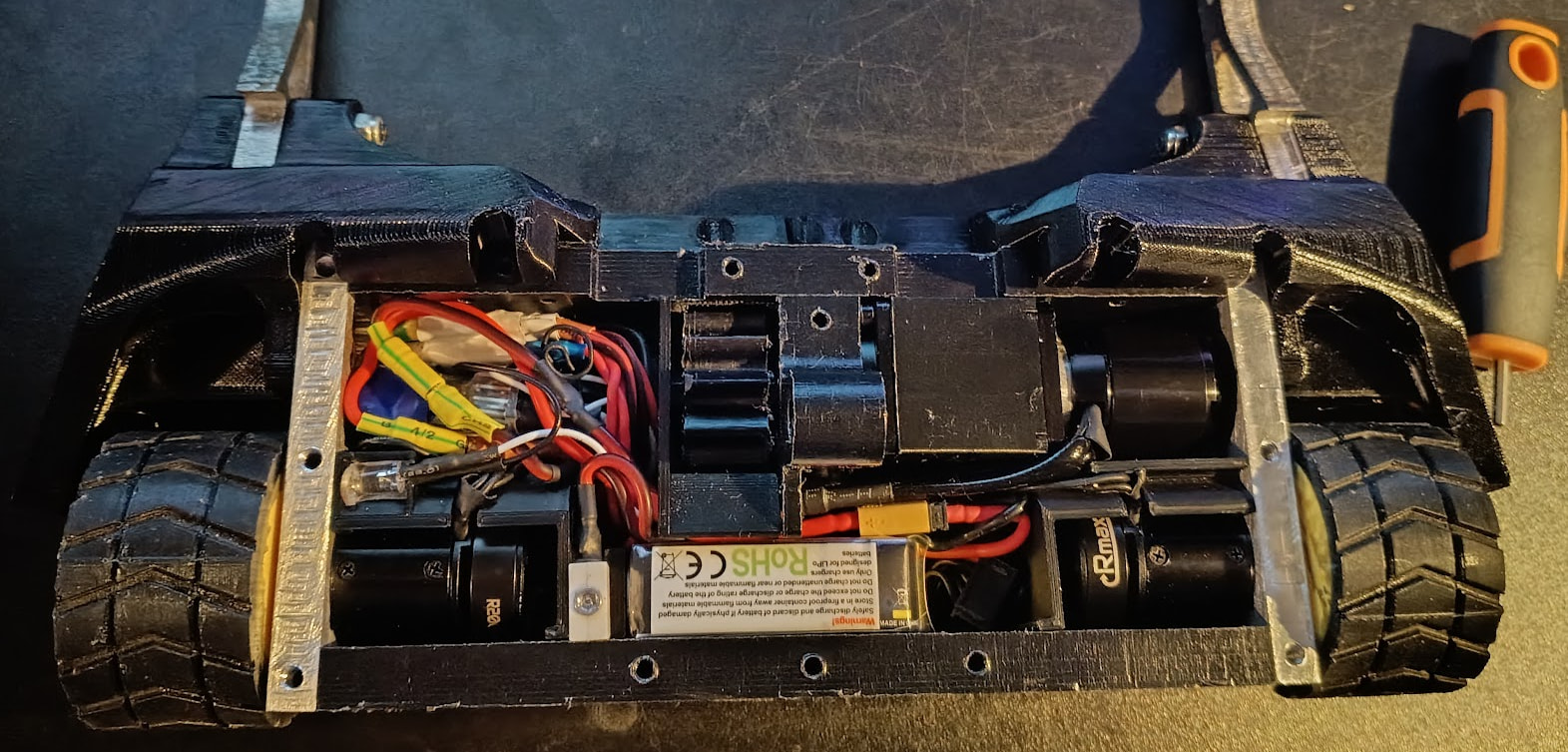
Incredibly happy with how it turned out. All of the components were fairly simple to manufacture and overall ease of maintenance seems to be decent. I was quite eager to test the grab and lift, but to ensure I didn’t completely obliterate the gearbox on the first lift, I reduced the power to 50%.
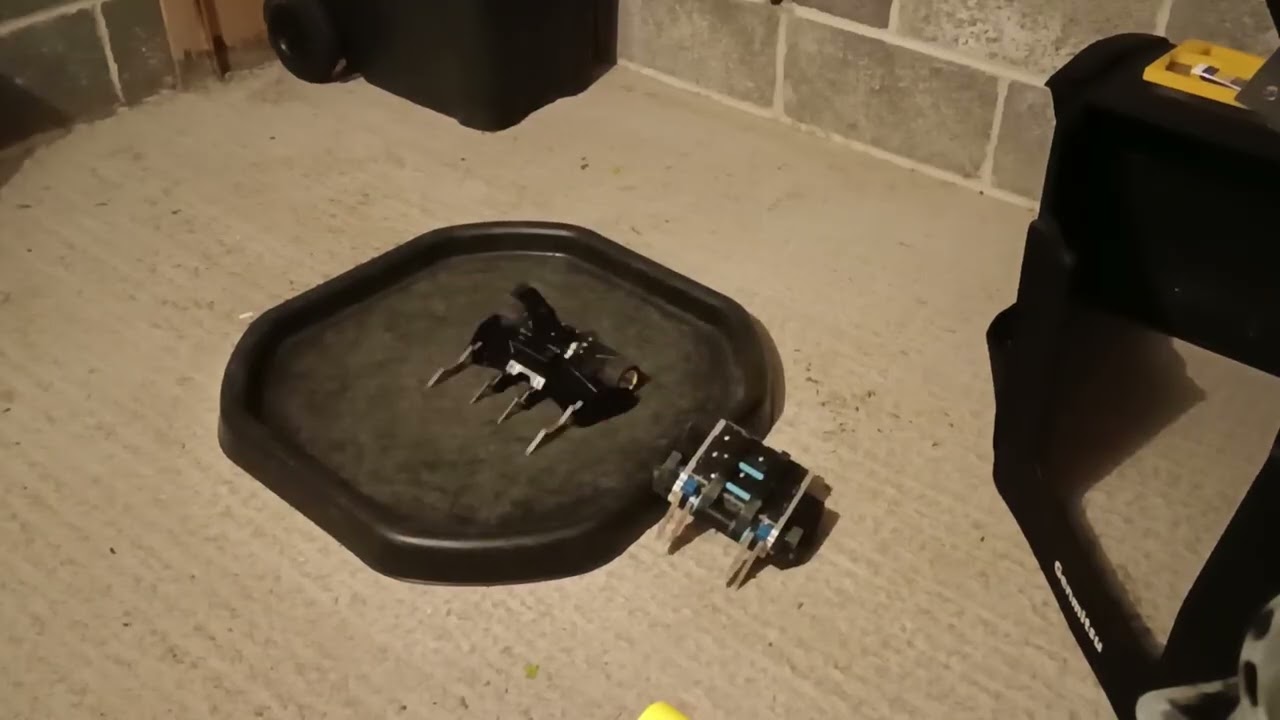
At 50% it actually turned out to be capable of fully throwing a 1.5kg mass upon a successful grab. After seeing this I was too much of a coward to up the power to 100%. With no clutch or position limiting, I didn’t want to risk destroying a fairly expensive gearbox so I left it at 50% and intend to keep it there for the first few events.
Overall I think I have fun new toy to try out for the events to come. It recently competed at Josh Dunn’s event with a relaxed rule set which made the perfect test bed for the machine of which I eagerly await the footage as there were some good moments.

