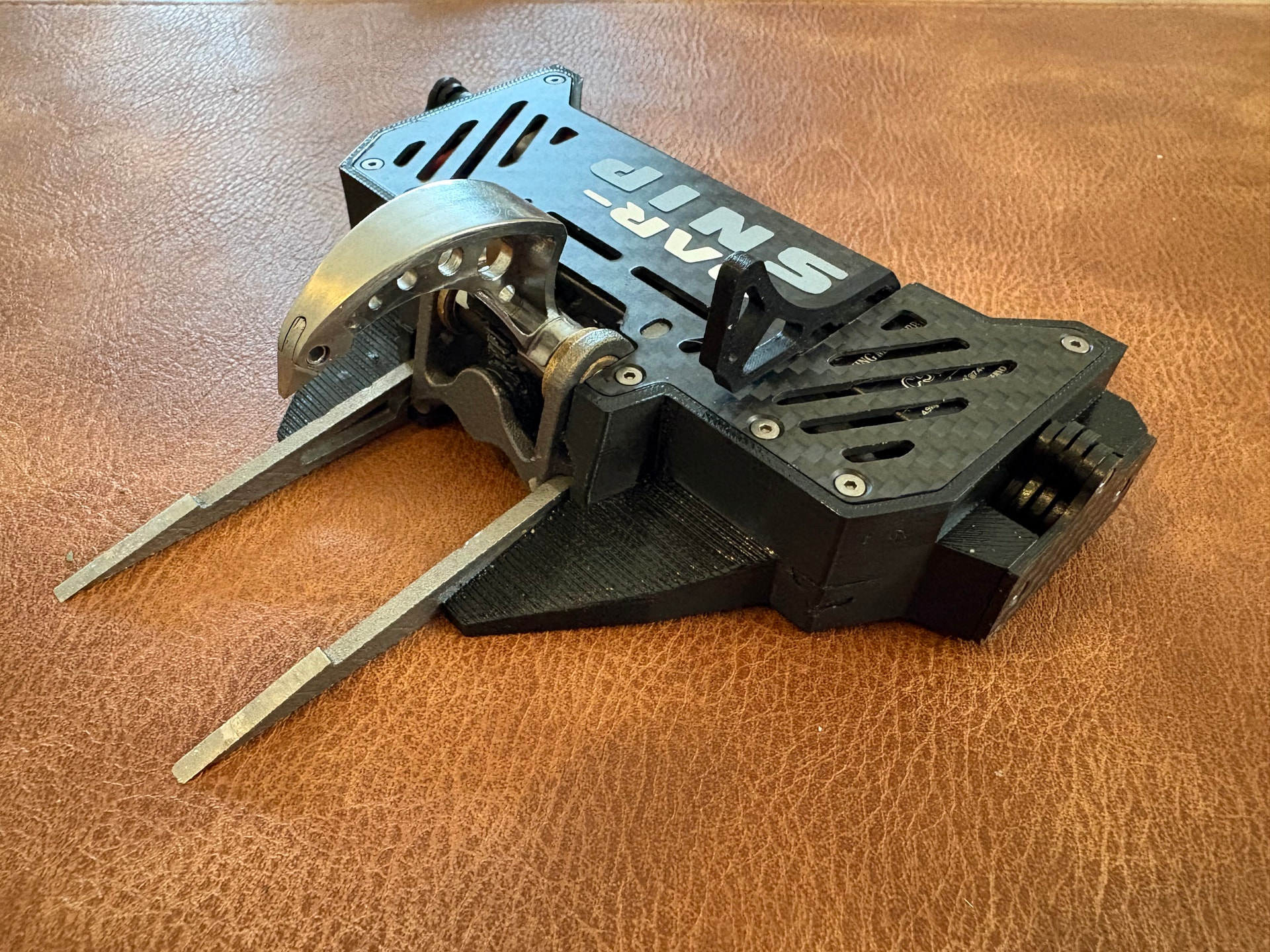
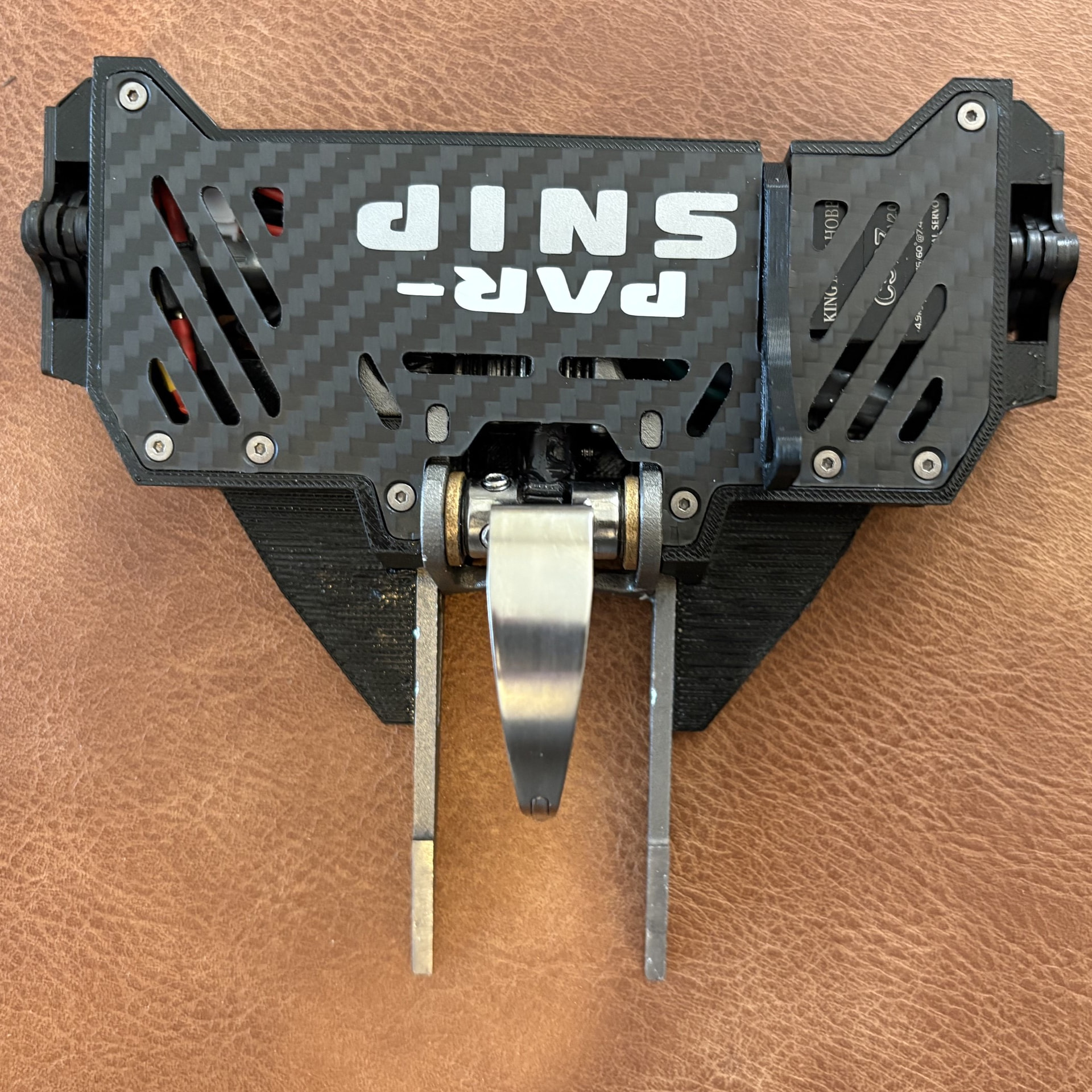
Parsnips bite back!?

They certainly can…

And to a level I’m not sure I’ve seen before at antweight… let me know if I’m wrong…

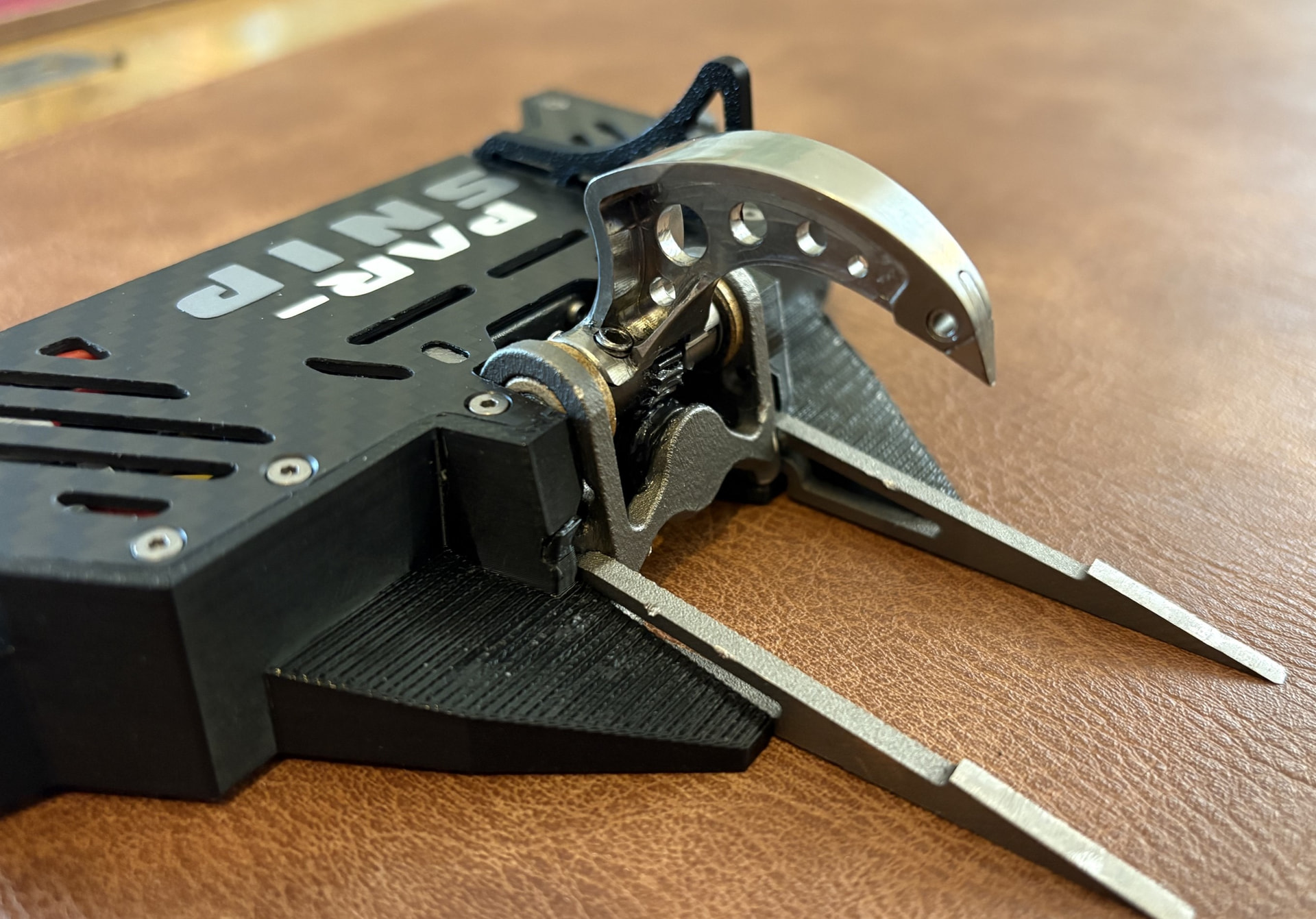
If they are fitted with a 50kg.cm servo, a 20:1 gear ratio (Psst that’s 1 ton-cm or 1000kg.cm theoretical max torque!!!), an s7 tool steel tooth and a lot of hours spent trying to harden steel because it wasn’t strong enough!

Then… and only then, do they get a little bitey…

I’ll do a full build log plus all the maths after Saturday. But for now the final bot will remain a secret… Don’t want any countermeasures showing up :rofl:

Still not wholly confident it won’t just have a catastrophic failure round 1 but that’s part of the fun.

See you Saturday!!

- PAR-SNIP

6 Likes

Standing Ovation GIFs - Find & Share on GIPHY

Top work, definitely the spiciest antweight crusher I’ve seen. Sneak peak looks amazing, can’t wait to see it in the flesh (and also the build log). Maybe we’ll even get a Parsnip vs Birdemic fight for some crusher vs not-quite-crusher (spicy grabber) action?

1000kg/cm is about 20x the theoretical max torque of Birdemic’s crusher, btw!

1 Like

That looks… scary. I have had plans in the works for an ant crusher for a while now that would use an 1806, but a big servo looks like it works well, if not likely better. Either way, from what little I can see in the photo it looks super cool

See you on saturday!

1 Like

oh no…

reprints bot with thinker lid

1 Like

now now… i said no counter measures :sweat_smile:

Yes yes,

oh crap did I say that out loud?!?

:rofl::rofl::rofl:

Great to see more Antweight crushers out there. Really cool bot.

(Don’t have time to redesign lids now anyways :slight_smile:)

1 Like

I, too, wish to eventually join the ranks of crusher antweights, so I will eagerly await the upcoming build log! The damage brings a tear to my eyes!

1 Like

it’s awesome, i’m here from killjoy rc video, hope to se more of the bot and definitely didn’t come across anything that made to the arena on thia level! we need more and I hope sooner or later i’ll join. The only downside i see in your mechanism is that worm gears are really inefficient so there might be a lot of crushing power lost there, can’t wait to see more coverage on this, also it might be worth having a thin blade for plastic/tpu bots on top of the heavy duty one

1 Like

Thank you very much! Yes they can be, i have a load cell i need to build to get a proper output reading then ill know for sure what force it coming out the end

1 Like

issue is at ant scale lead screws (which, let’s face it, don’t really go to this size so we’re looking at using a machine screw and nut) are pretty much as inefficient. Fact of the matter is there’s not really a truly efficient mechanism for crushing, and the solution to inefficiency is to throw more power at it - as you have with the brushless gearmotor setup :wink:

Loved seeing this in action at the weekend, super cool build.

2 Likes

Where to begin?

If you don’t already know… I’m a firefighter and love hydraulic rescue tools… so a jaw of life/crusher style bot has been my main focus for the past year.

So, I present to you… the next in my root vegetable themed bots… PAR-SNIP!!!

I’m not sure how many parts this build log will be, but I plan to cover all my findings from this project and future developments as I try to hone this into something vaguely competitive… and not the slow-moving brick it was at the BBB June social 2026. I hope you will find this interesting and that maybe someone can take this even further to the ultimate crusher bot!!

Let’s start with the bit everyone will be most interested in. The gear train and where the power comes from.

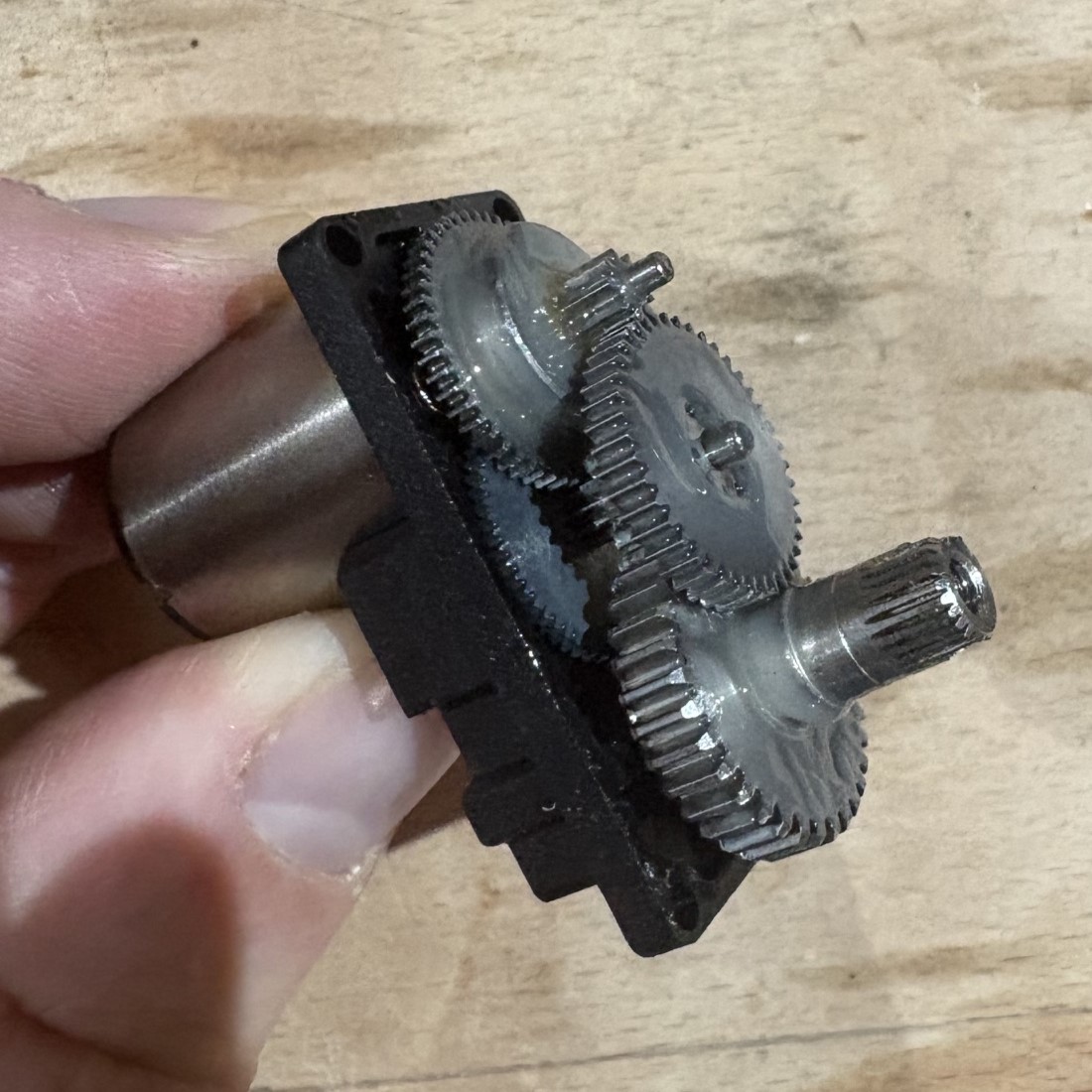
When I first started on this, I quickly settled on using a 50kg.cm servo as the core of the bot. Seemed like a very straightforward way of getting a simple up and down motion, and easy enough to gear up to get something torquey. Design one was a 0.8 mod gear train, which was something like a 13t > 25t compound to 12t > 30t. Which I think math’d out around 250kg.cm for the final output.

This first version had a few limitations; I was limiting myself to the stock servo for easy replacement, a limited active angle from the servo output of only 270 degrees and it was very, very, heavy. The servo alone was 65g.

(just in case you aren’t too familiar with gear ratios. The more reductions you have the more torque you can produce… but… and it’s a BIG BUT… at the proportional cost of speed and in the case usable range)

This first set up only had a 60 degrees arc of motion, closing in an estimated 3 seconds, with 250kg.cm theoretical max, and it can be back driven (so, if you want to hold someone with the full force of the system you have to continue to apply power to the servo, drains the battery fast and risks cooking the motor) Not bad but we can do better.

After some brutality to the servo…

I took out at least 20g, all the casing is gone, and I have removed the potentiometer and the brain of the servo. Now it’s just a motor and some gears. That gives me 360 degrees of infinite rotation. This now removes my previous limited arc issue. Now it’s just a balance between speed and power.

I had considered a pinion system, although one of the more efficient options, its heavy and that key point from before… can be back driven…

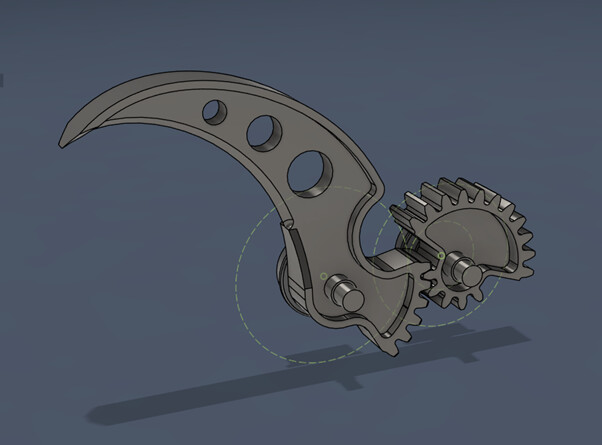
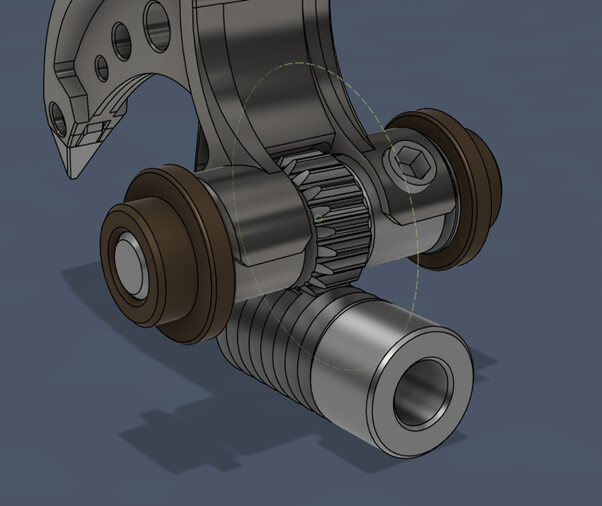
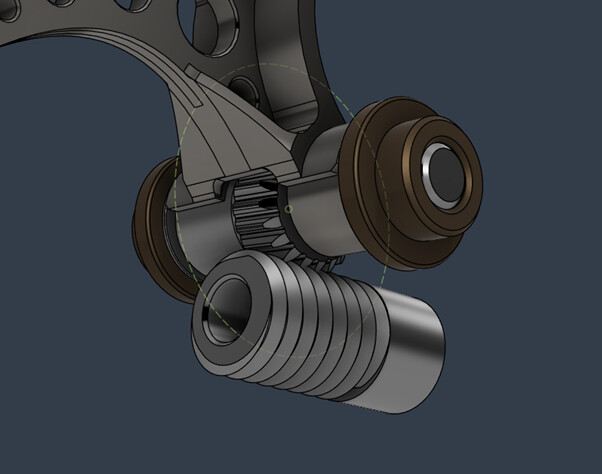
That left me with one option really and that’s the worm drive. Not super-efficient that’s for sure but can utilise that full rotation. You can expect a loss of around 40-60% with a badly set up, poorly lubricated system. BUT… they ‘can’t’ be back driven (if it closes… it stays closed! no power required) and you can get some crazy ratios in a very small compact and lightweight form factor.

The final gearbox of PAR-SNIP runs a 0.5 mod worm drive onto a 20t contoured pinion. This gets that sweet 20:1 gear ratio, so a max theoretical output torque at the jaw pivot of around 1000kg.cm. This however is of course subject to physics… who apparently must take its pound of flesh… leaving a more realistic end torque of 500kg.cm. Still, that’s roughly double the pinion setup and it locks up like a dog’s jaw onto your favourite slipper.

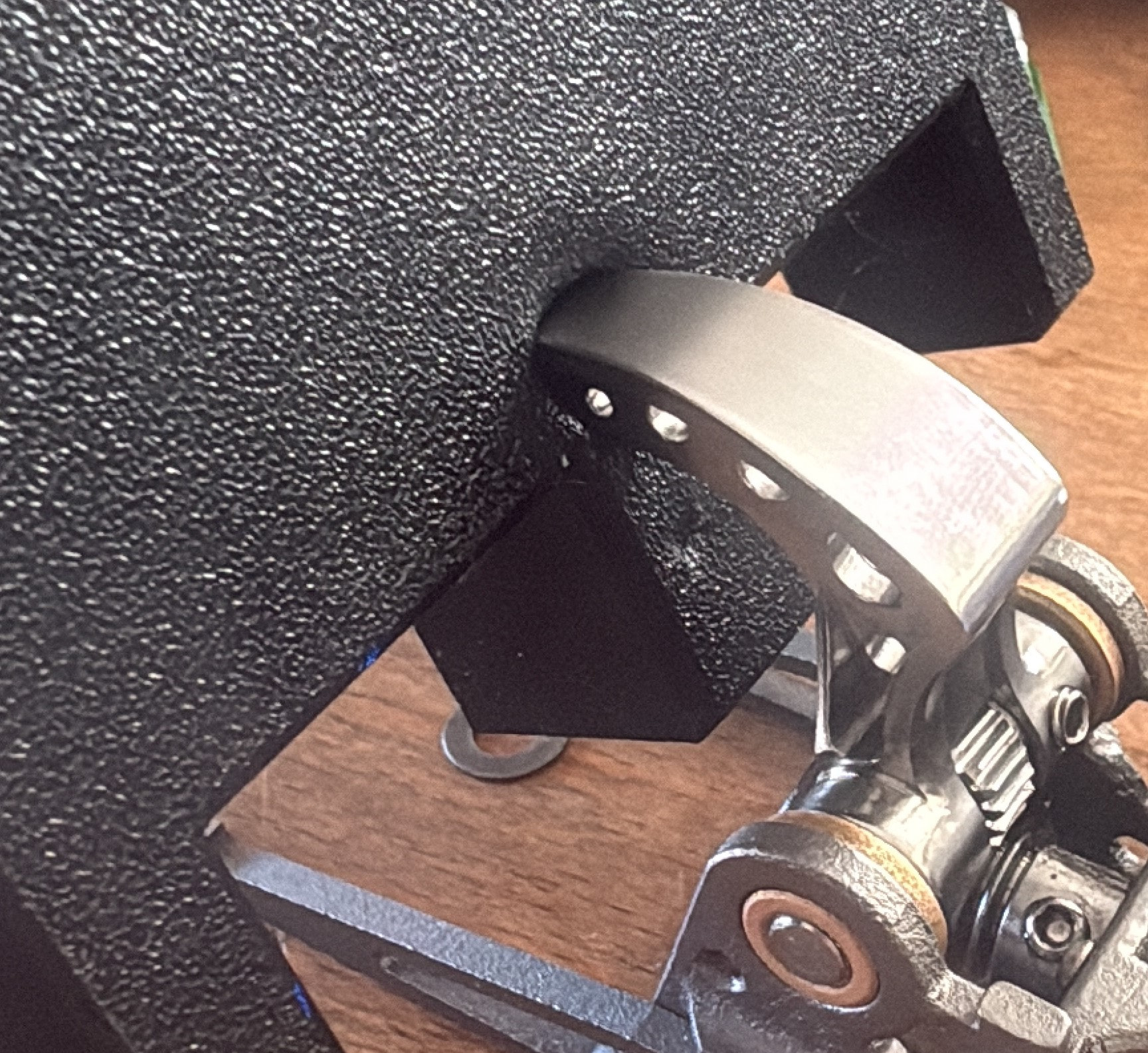
These numbers all sound great… but only matter if the gearbox, jaw and chassis survive long enough to use them… Even if the force doesn’t make it to the tip of the jaw… it must go somewhere…
5 Likes

Absolutely beautiful robot, really enjoyed getting a good close look at this on Saturday! What model of servo is that? I’ve been looking to get more power out of Birdemic, so that it can actually do some intentional damage (rather than just hoping it goes through a hole in a top plate or weapon motor, or jams a wheel against a bulkhead), but most of the servos I found had big chunky single piece alloy bodies that made them too heavy without significant surgery. It looks like you found one with a two piece body that let you remove the heavy casing and keep the alloy gearbox housing, and I think I might have optimised my robot enough that I could spare the extra weight of a servo gearbox like that…

Also, regarding back-drive. Birdemic’s little whirly crank mechanism* has a much lower reduction ratio, about 2:1, but it doesn’t suffer from back-drive issues for two reasons - the first is that the drag in the system from the gear reduction is more than any antweight lifter or flipper can overcome (even Fatal Deviant, which uses the same gearbox and similarly specced brushed motor but with a 1.6:1 pulley overdrive) - one of my tactics is actually to close it on an opponent’s weapon as they open it, hoping to damage it. (this hasn’t worked yet but maybe one day?) The second is that I configured the ESC for brake on stop, which shorts the motor windings together when idle and makes the weapon very hard to move, even by hand, compared to when the bot is switched off. The result is that the weapon is actually un-powered when it isn’t moving, but with the combination of braked gearbox and the sharp weapon tip digging into the opponent’s plastics a little they’re rarely able to escape. Even with the spicy drive I can get 3-4 fights out of the 3s 280mah battery before I even have to think about charging it.

*I think whirly crank mechanisms are underutilised in robots, as while a gearbox arrangement has you trading off speed and torque, reciprocating cranks let you trade torque for range of motion while keeping speed. You can also induce some extra resistance against back-drive by having the crank come to a rest in line with its pivot point, but that only happens on very thin robots.

Finally, how are you powering the servo motor? The stall current might be higher than a Malenki HV or other antweight ESC can provide, so it’s going into over-current protection before you hit max torque. While that’ll be great for motor lifespan, you might be able to get more power for the same weight by switching it for a (usually lighter) in-runner brushless motor and matching ESC - I use a 12mm in-runner and emax bullet 12A, but I bet you could swap for an in-runner of the same diameter as that coreless brushed motor and still save weight.

Again, stunning robot, I can’t wait to see it iterated on and chopping some bots in half.

2 Likes

I’ll work my way through all those bits you’ve asked as I complete the build log, next I think will be gear box, then electrical then jaw, then finally the rest of the bot

1 Like