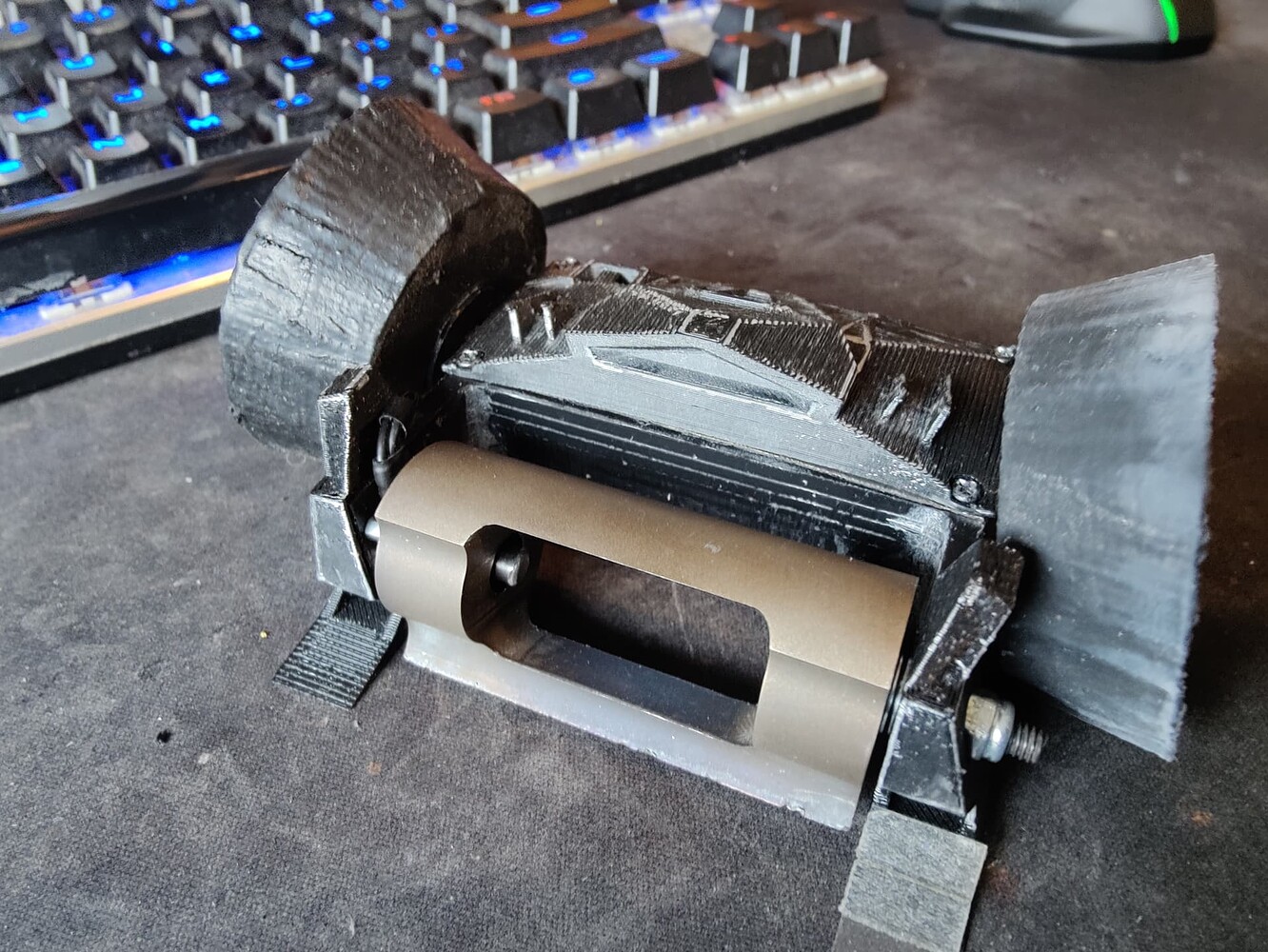
What I have learned about foam big wheels.
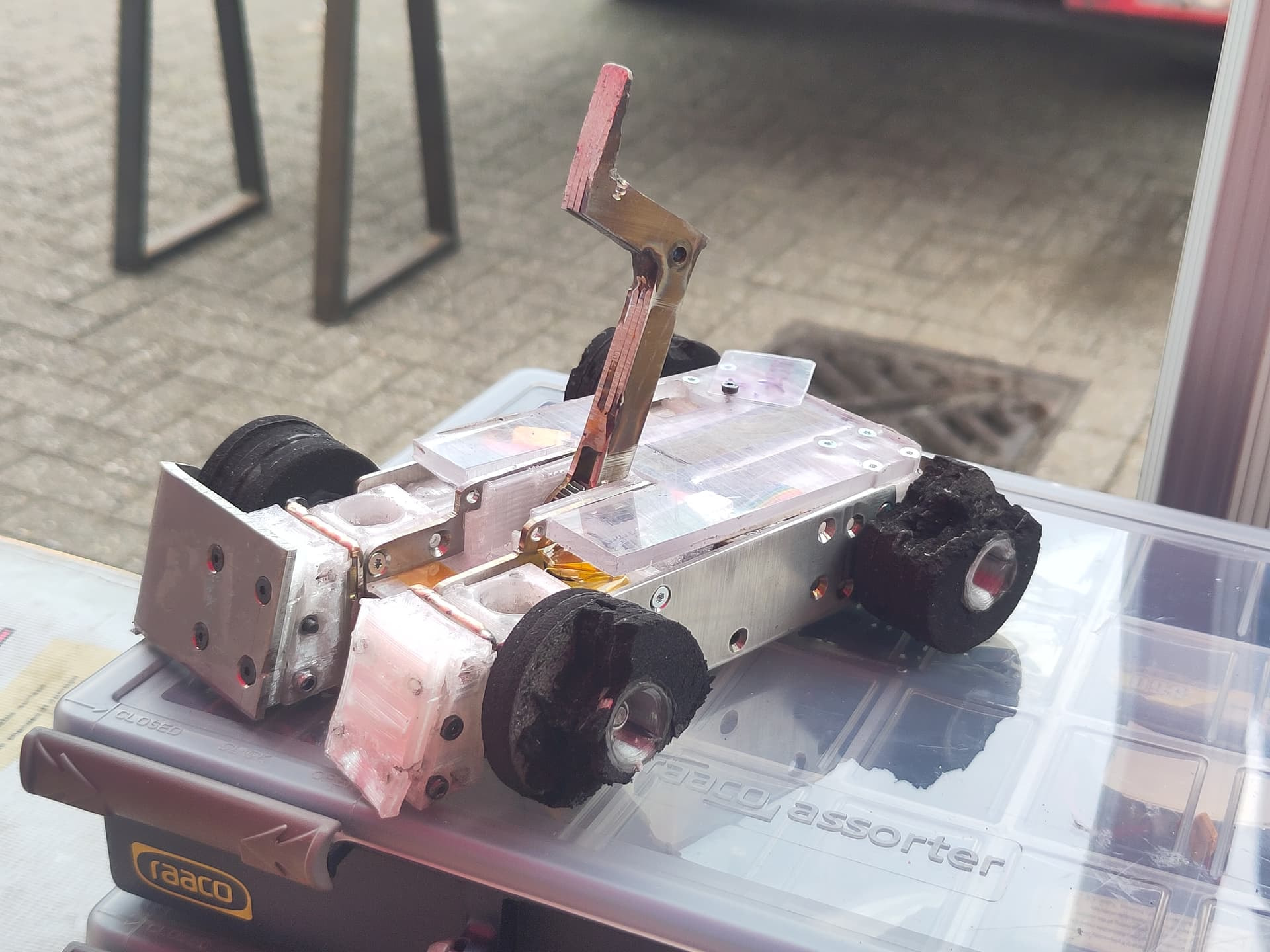
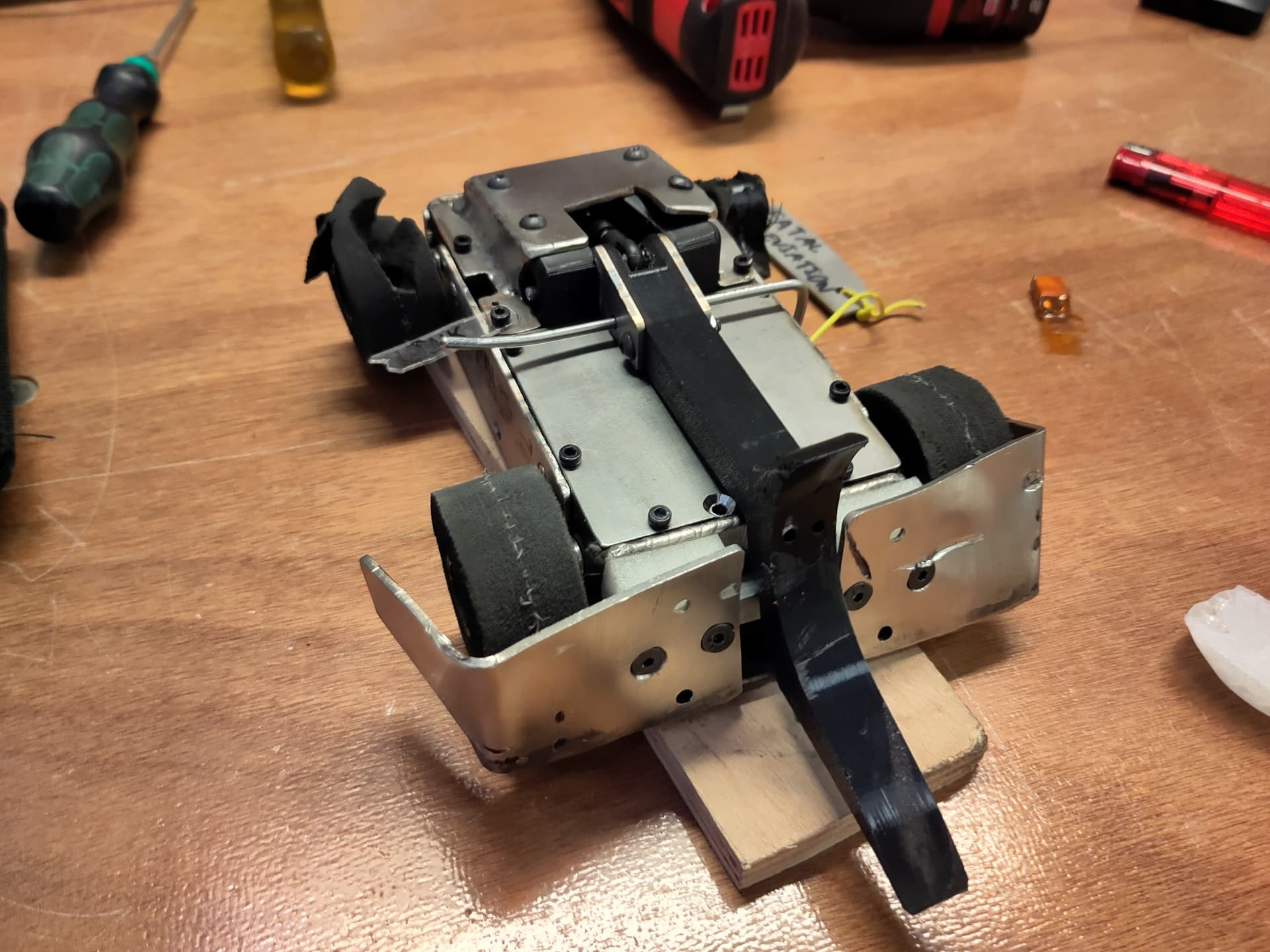
My name is Alex, I have been working on a 150g big wheel robot called Eclipse - 150. I have been working on it for about three years now. Since it debuted it has seen over 100 fights and broken every component I can think of! (it’ll figure out something new to break next week, don’t worry!)
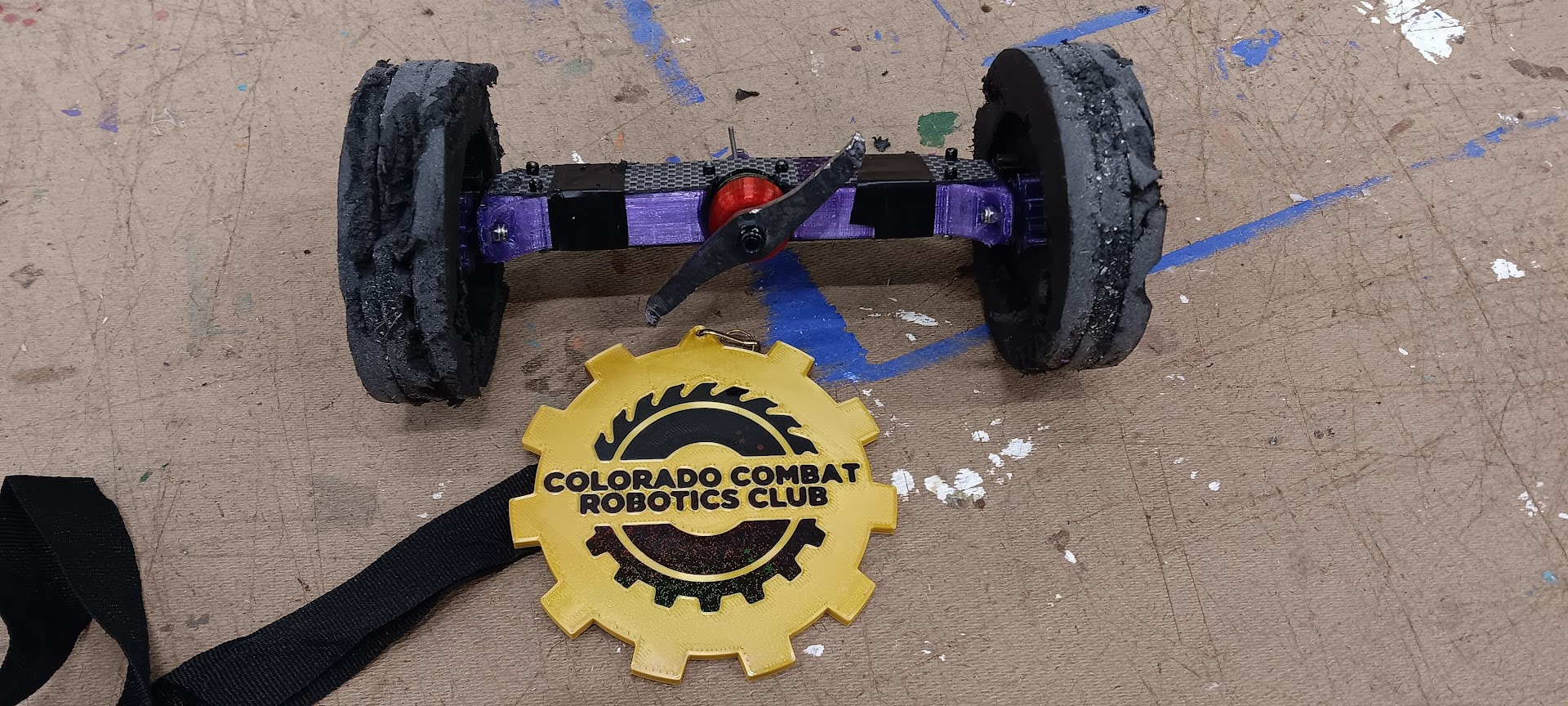
I have a strong belief that foam is the go-to material for an antweight (fairyweight if your from my part of the world!) big wheel robot. Its lightweight, cheap, easy to replace, and surprisingly strong. It allows you to create a full wheel instead of relying on the survivability of some spokes.
The foam:
For the majority of Eclipse - 150s life, I have been using exclusively EVA foam. This has been the standard for big wheels in the weight class! I have also recently started using another polymer, Polyethene! Closed cell polyethene to be specific. I have learned a lot about each of these materials by pushing them to their limits. Here is a breif-ish rundown of both materials!
EVA:
Lets start with EVA foam! EVA stands for Ethylene-vinyl acetate. I will not be calling it this.
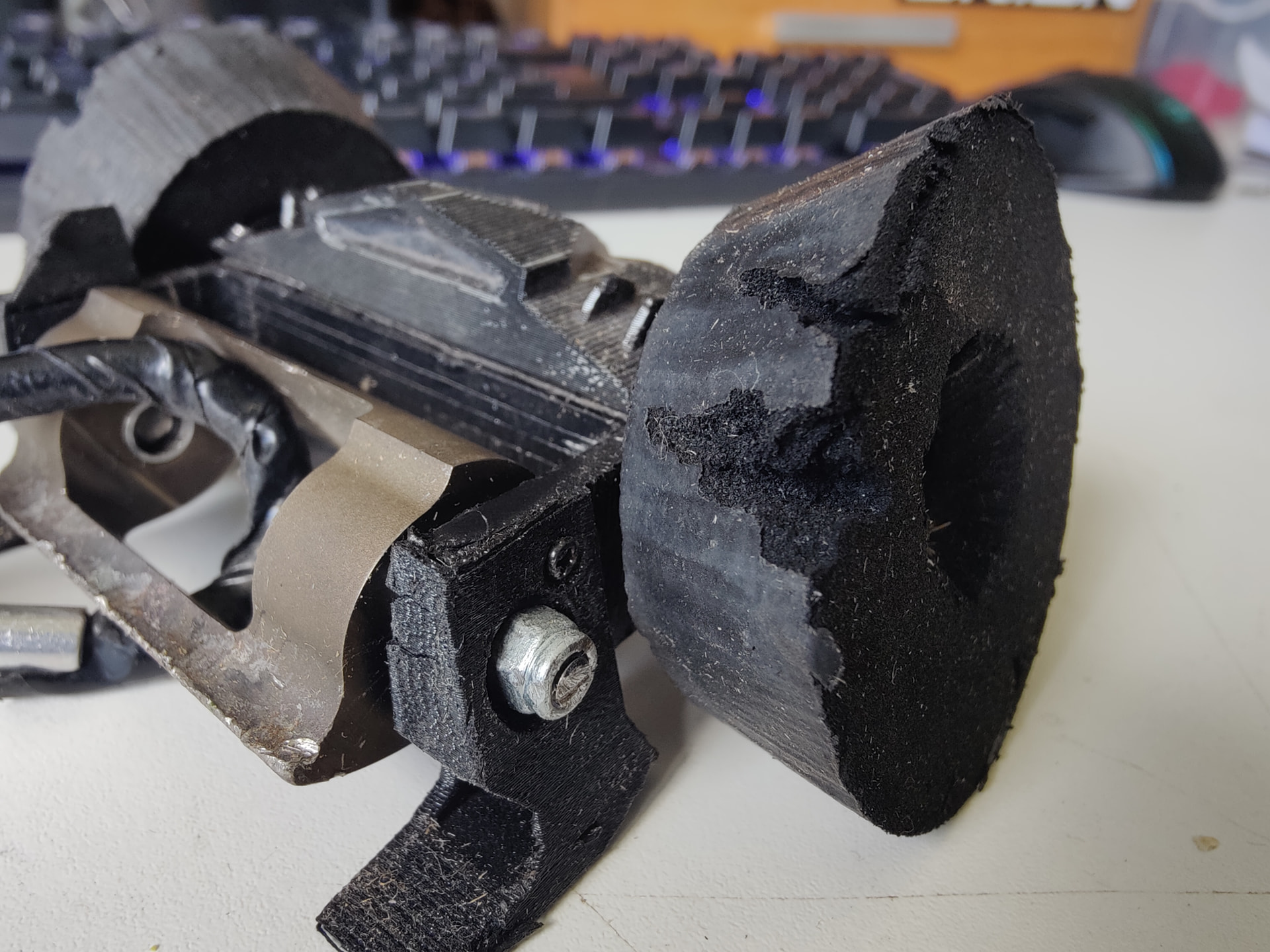
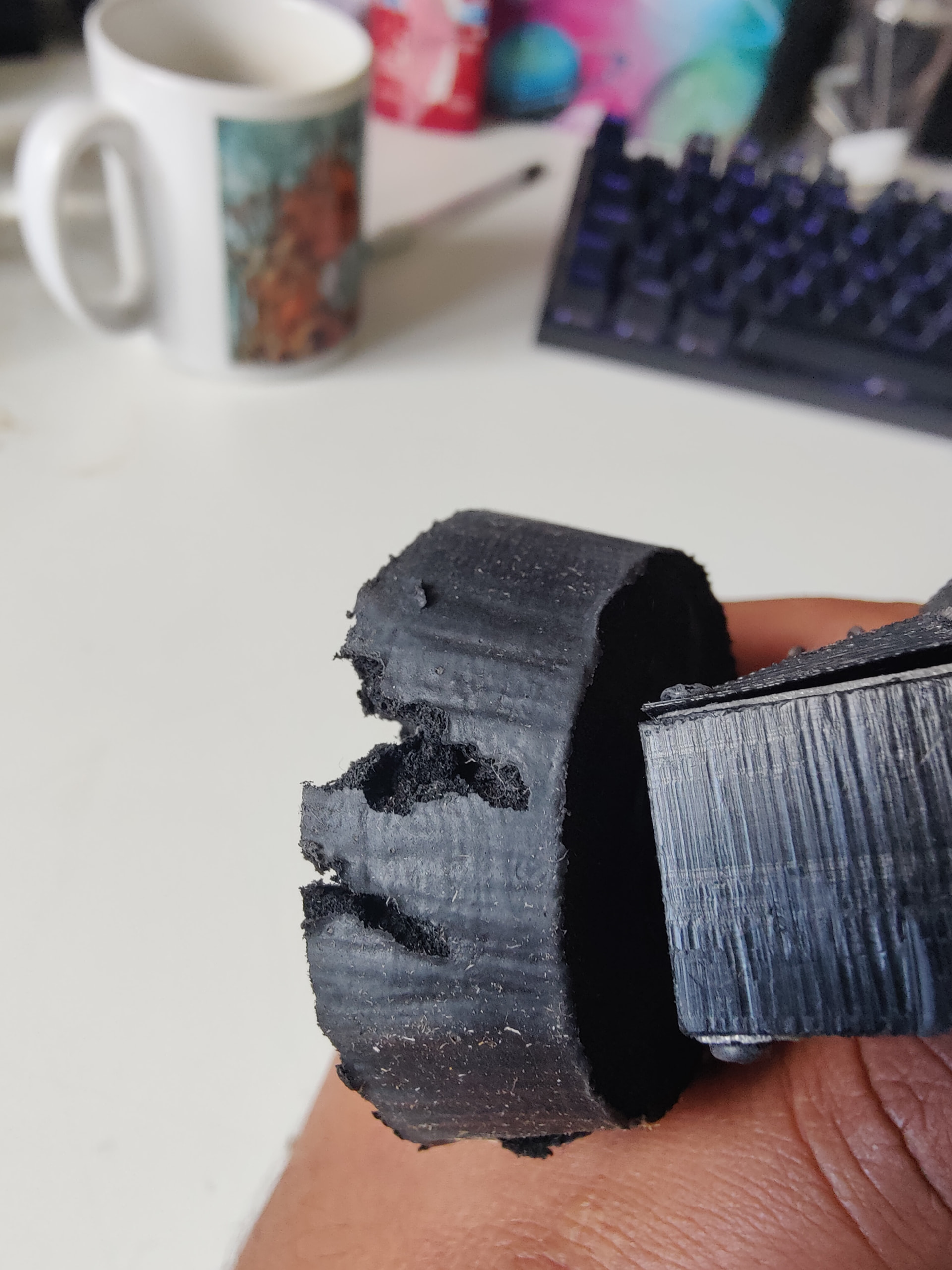
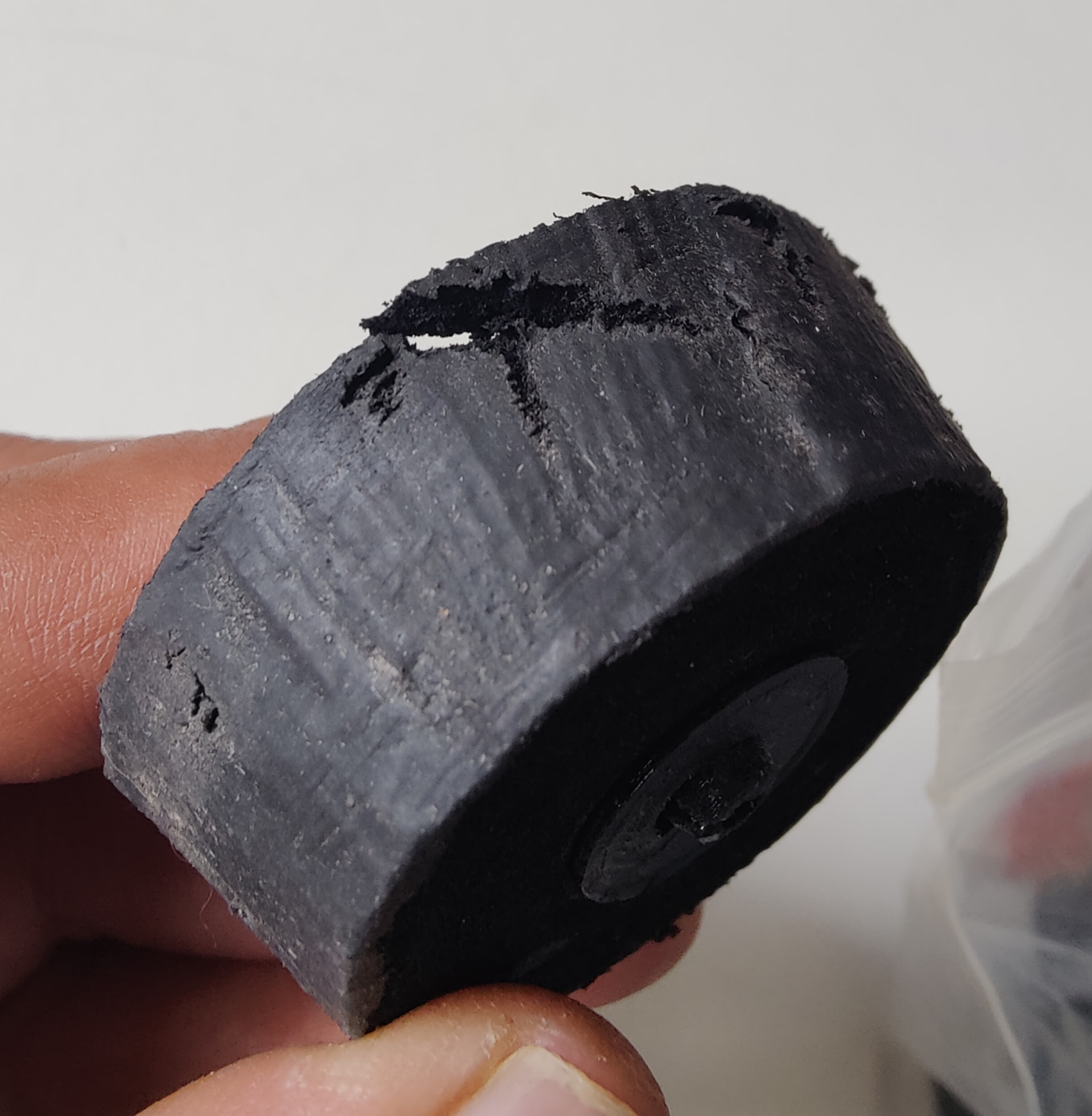
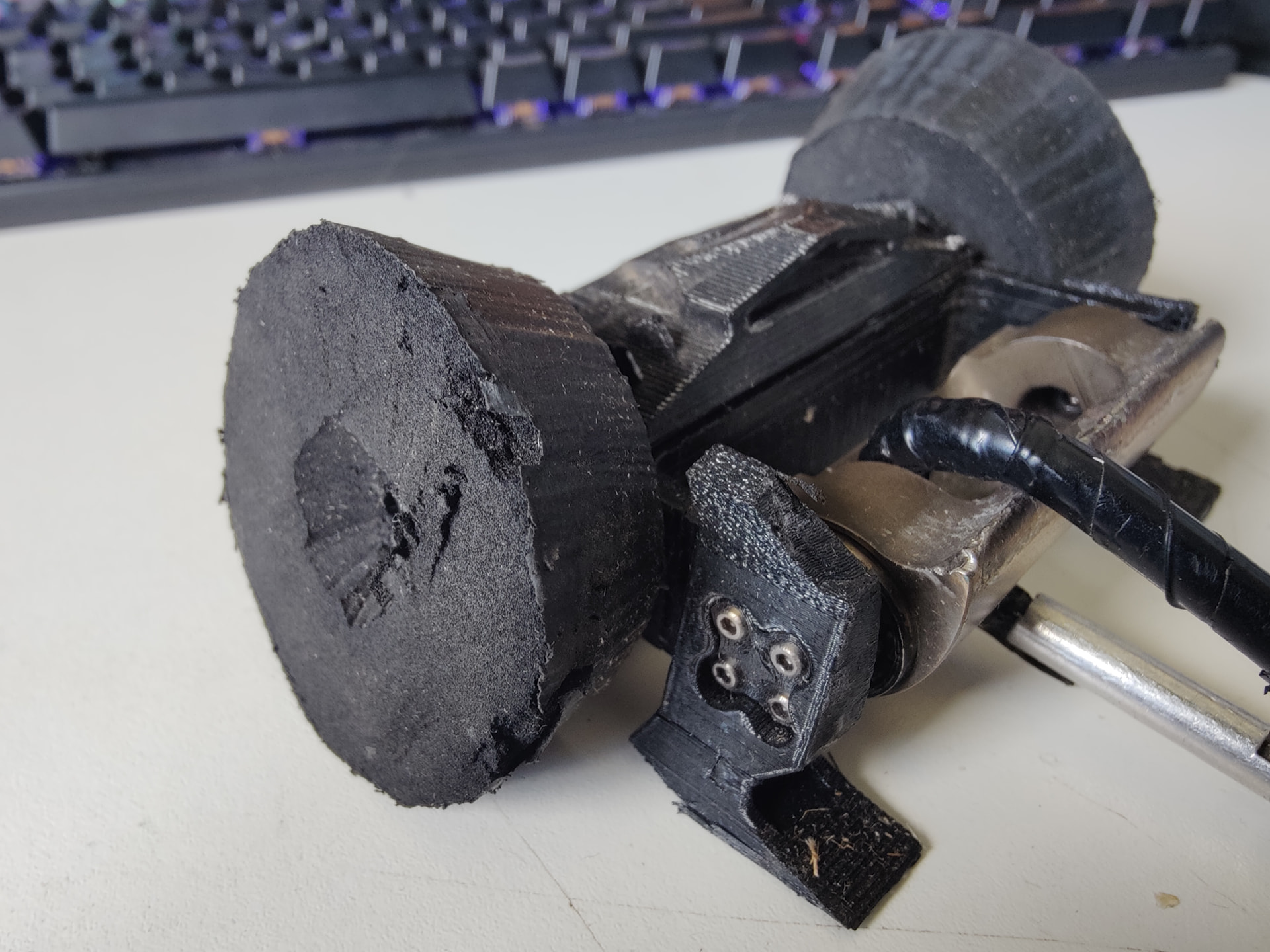
EVA is lightweight, sturdy, and very cheap! Its an all around good pick for foam wheels. Damage To the foam will typically look something like this.
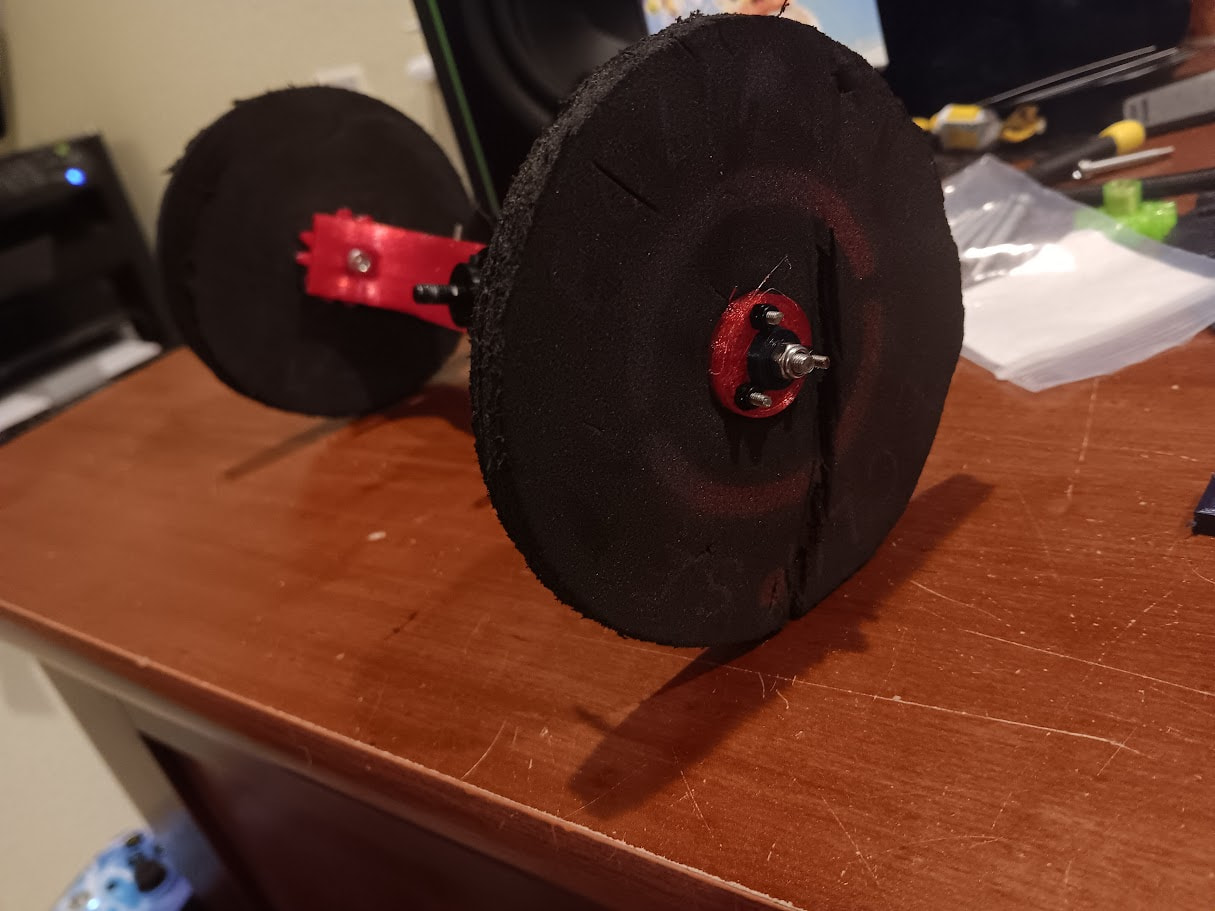
An upside about EVA is that its sturdy. A downside about EVA is that its sturdy. A vert can only launch a bot if it has something to push. The EVA is sturdy enough to be that thing to push up.
Does this matter? Nah, not really, not the launching. (unless your heading for a evil scary pit) The big issue is the stress this can put on the wheels.
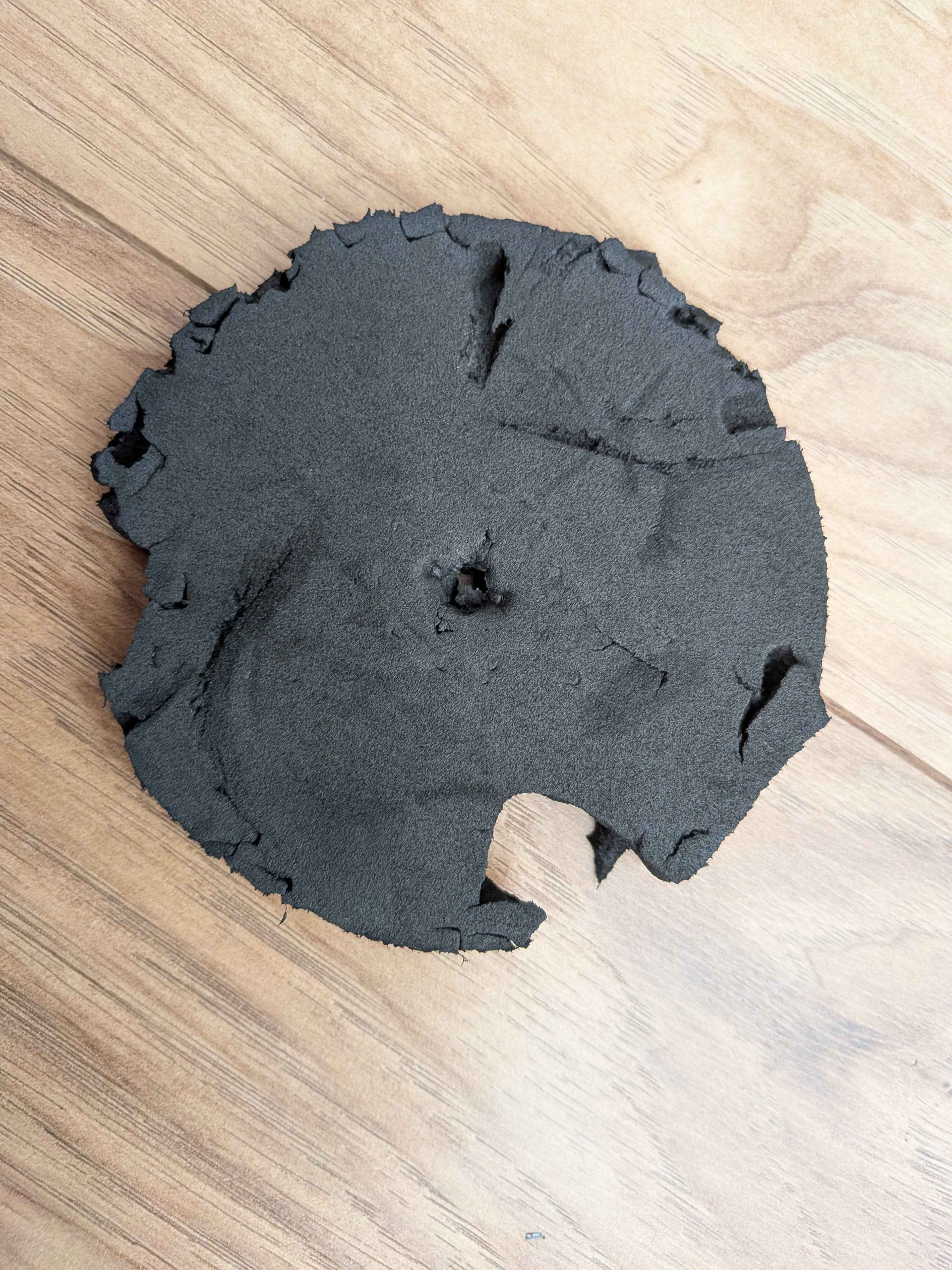
EVA tears into chunks. You could take one of my wheels and tear it in half. I would be really annoyed with you, but you could do it. (please dont) This means that a couple of well placed hits could tear off large chunks of the wheel. The hits don’t even have to go all the way through! This can add up quite quick, however they don’t tend to go that far into the wheel. it can make driving a bit wonky, but it wont cost you the fight.
Closed-cell polyethylene
Polyethylene also known as PE (I say Polyethylene in person, it just sucks to spell) comes in many shapes and forms. If you google “Polyethylene” you will probably see a bunch of white pellets, surprisingly I don’t use tiny white pellets for my drive. If you want to make PE wheels search for Polyethylene foam. Somehow, this really does not make finding the right kind of PE easier.
The two things I look for when it comes to PE are the terms “Closed cell” and “Low density” be careful as they can often be shipped in pre-cut rectangles because this foam is mostly used for shipping. The best source I have found in the UK is a company called EFoam.
Polyethene is extremely light weight. My PE wheels weigh less then my EVA wheels, despite being over twice as thick. This is most of PE is just air. This means its quite easy to squish! I could see this actually being a really good material for shock absorption for the inside of bigger bots.
Lets get on a little tangent. If you have watched battlebots, you probably have seen the robot Shatter. This robot has a pretty unique method of armoring its side. It uses a plastic that gets eaten away on hits, this prevents shatter from taking direct hits on the frame, while also preventing the bot from getting launched!
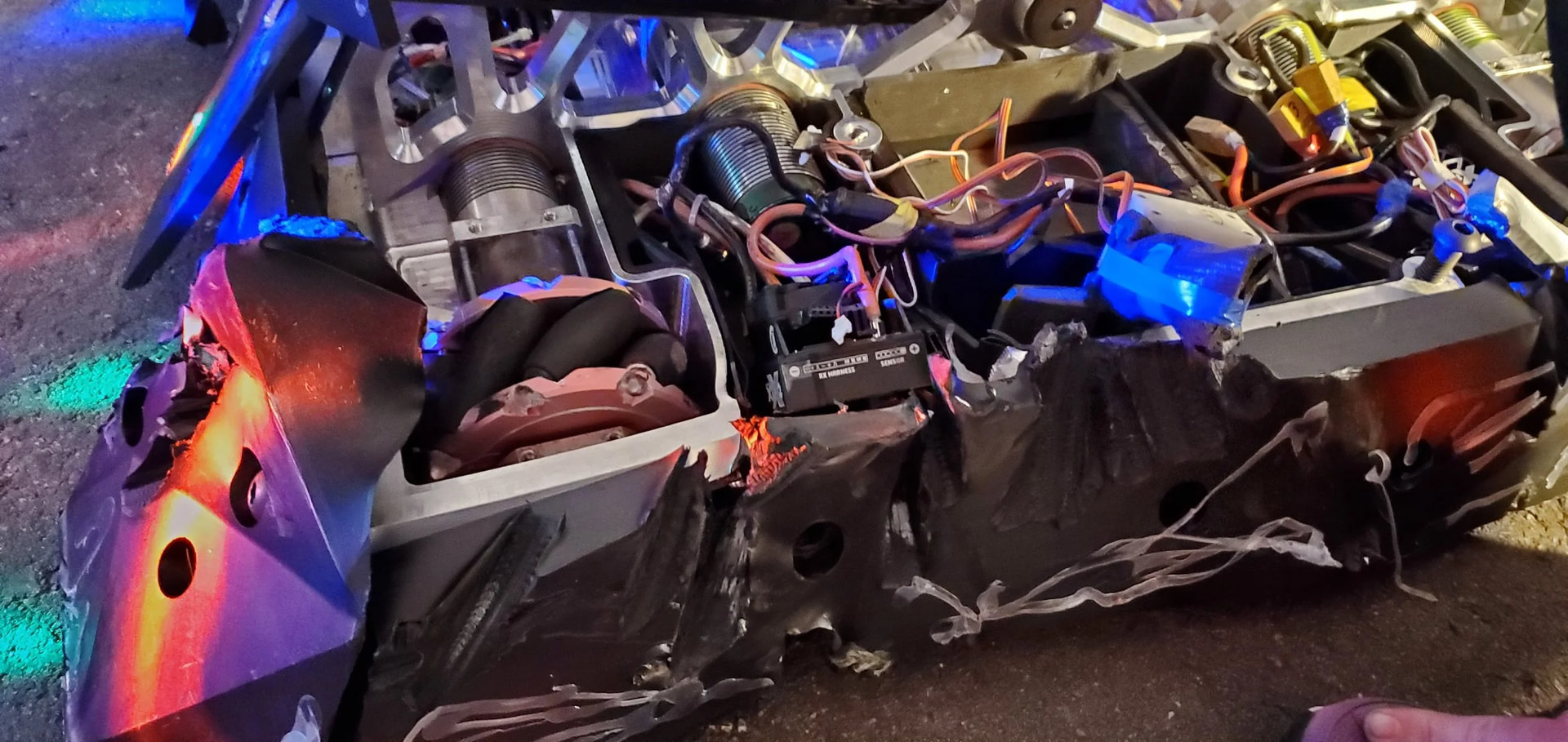
How does this heavyweight hammer bot relate to a 150g big wheel? Well, PE works the same!
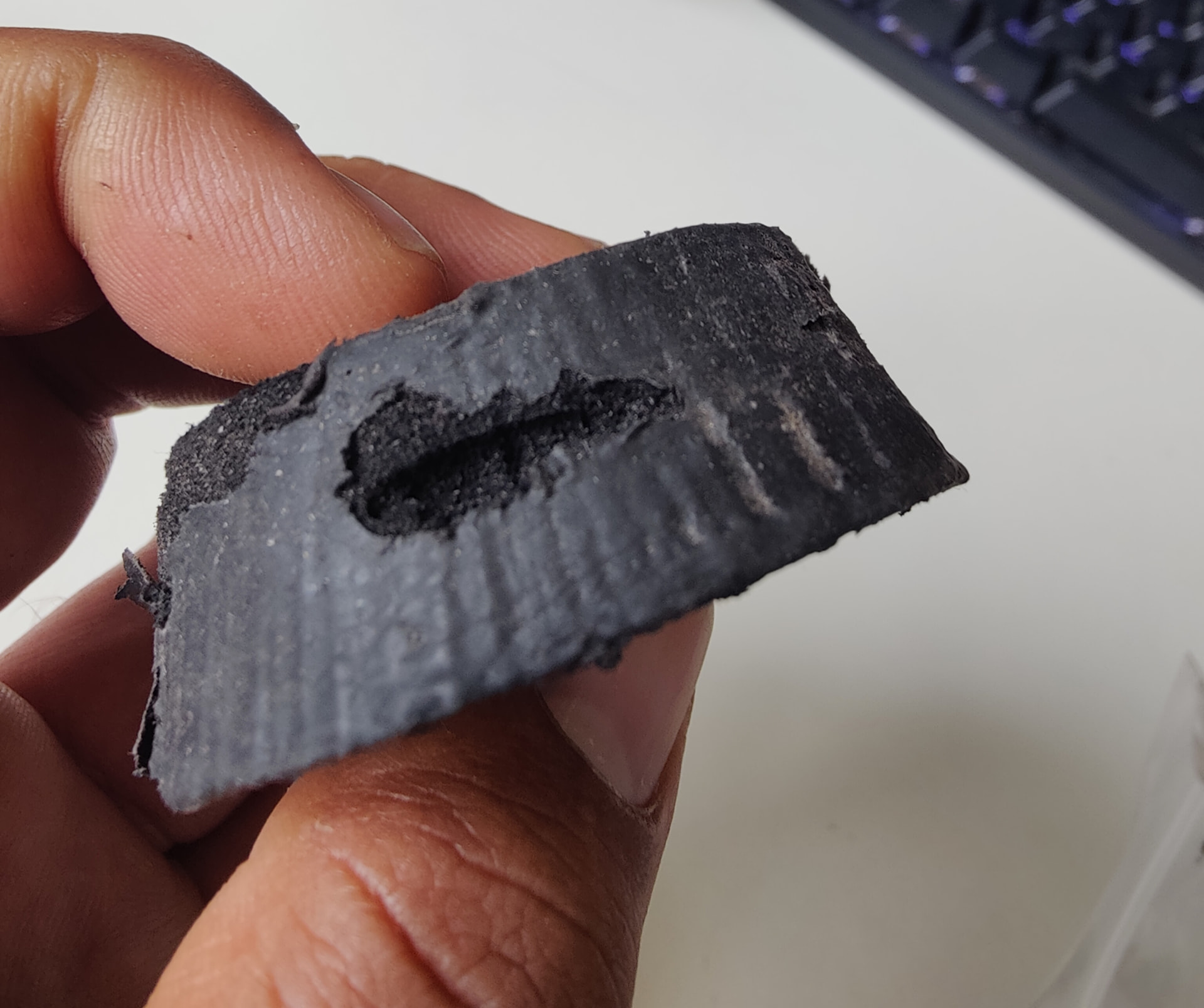
PE does not get launched (as easily) as EVA wheel equivalents, and while the damage does look worse the structure of the wheel stays more intact. Additionally, it can make the arena a bit messy, this insures that EO’s love your robot!
PE will hold up to repeated hits, and as long as the blade does not go all the way through, the wheel will stay the correct shape. This means that the thicker the PE wheel, the better.
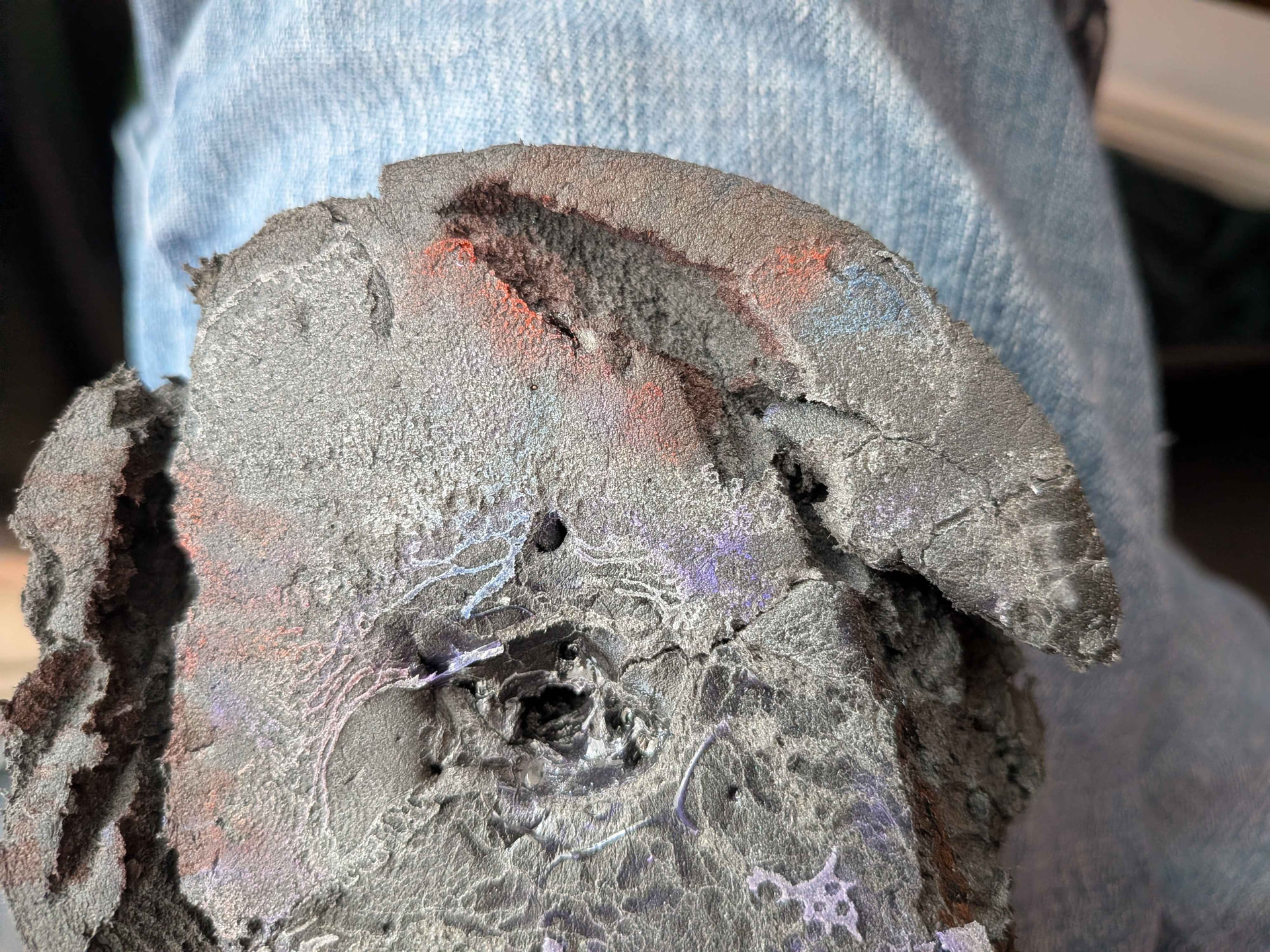
Now wait. . .
What happens if the opponent has a blade with more bite then you have wheel?
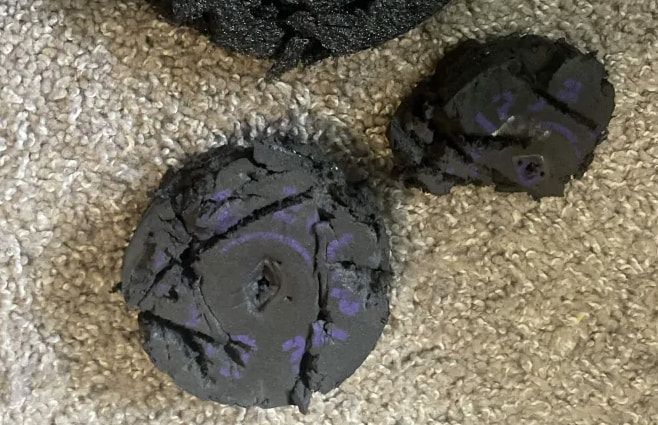
I have learned the hard way that PE does not like bigger diameter weapons, Verts tend to push the bot out of the way enough to withstand the damage. But with nothing to launch, the wheel will just stay in place. Bye Bye Wheel.
In conclusion:
EVA and Polyethylene are not the only foams on the market, and there are probably a million different foams that one could use. There probably is some super-foam that would work against every opponent and still have time to save Lois Lane on the side. However, of the foams I know, these two have properties that make them stand out for different reasons.
If you plan on making a 150g big wheel or just want to make some ultra light wheels for a lower to the ground bot, these two foams could be a good place to start!
Now, I have a very difficult question to ask myself. Do I really want to be that guy who makes different wheels for different opponents for an ant weight? Yes, Yes I do.