Hi,
I’ve recently (between other things) been doing a bit of testing on different PLA based 3d printed plastics.
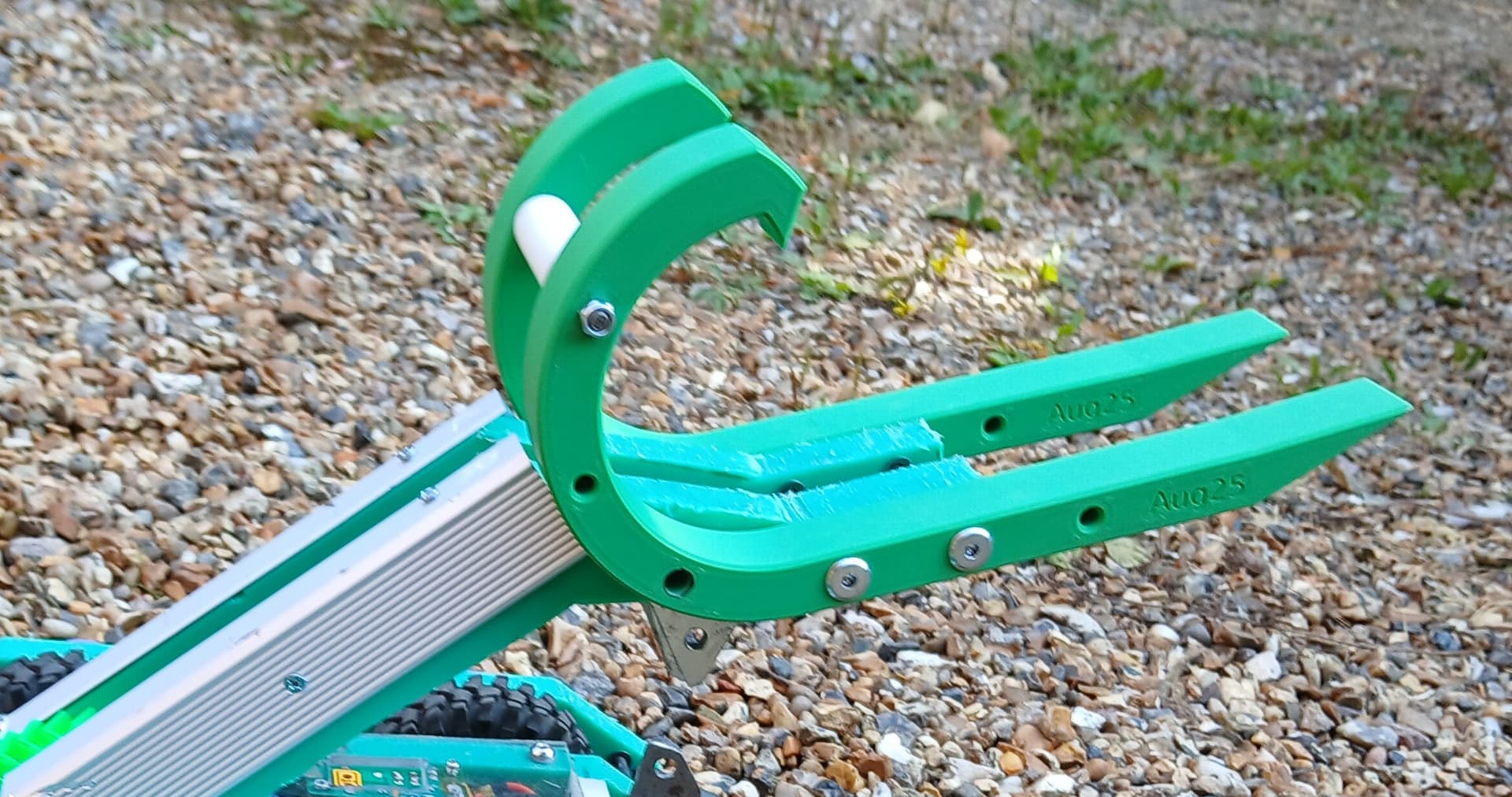
You may have heard of the conventional wisdom “PLA is rubbish for combat robots”. This was certainly the case a few years ago, and is still true in some cases, but it’s not as clear as that.
Strength vs impact resistance
You may think that stronger materials are better. But this is generally not the case. PLA is one of the strongest 3d printed materials, based on its yielding strength, but also one of the worst for impact resistance.
This is because impacts tend to shatter the material, cracks propagate and then it will catastrophically fail. This is usually not what you want.
Different grades
You might see a lot of materials branded as “PLA+” - these are all slightly different, but the principle is to add some modifiers to the PLA to make it softer and less likely to shatter. As with anything, it’s a trade-off, and the softened materials will make less accurate details and cause more printing artefacts. These often don’t matter for pieces which aren’t intended to be decorative.
The experiment
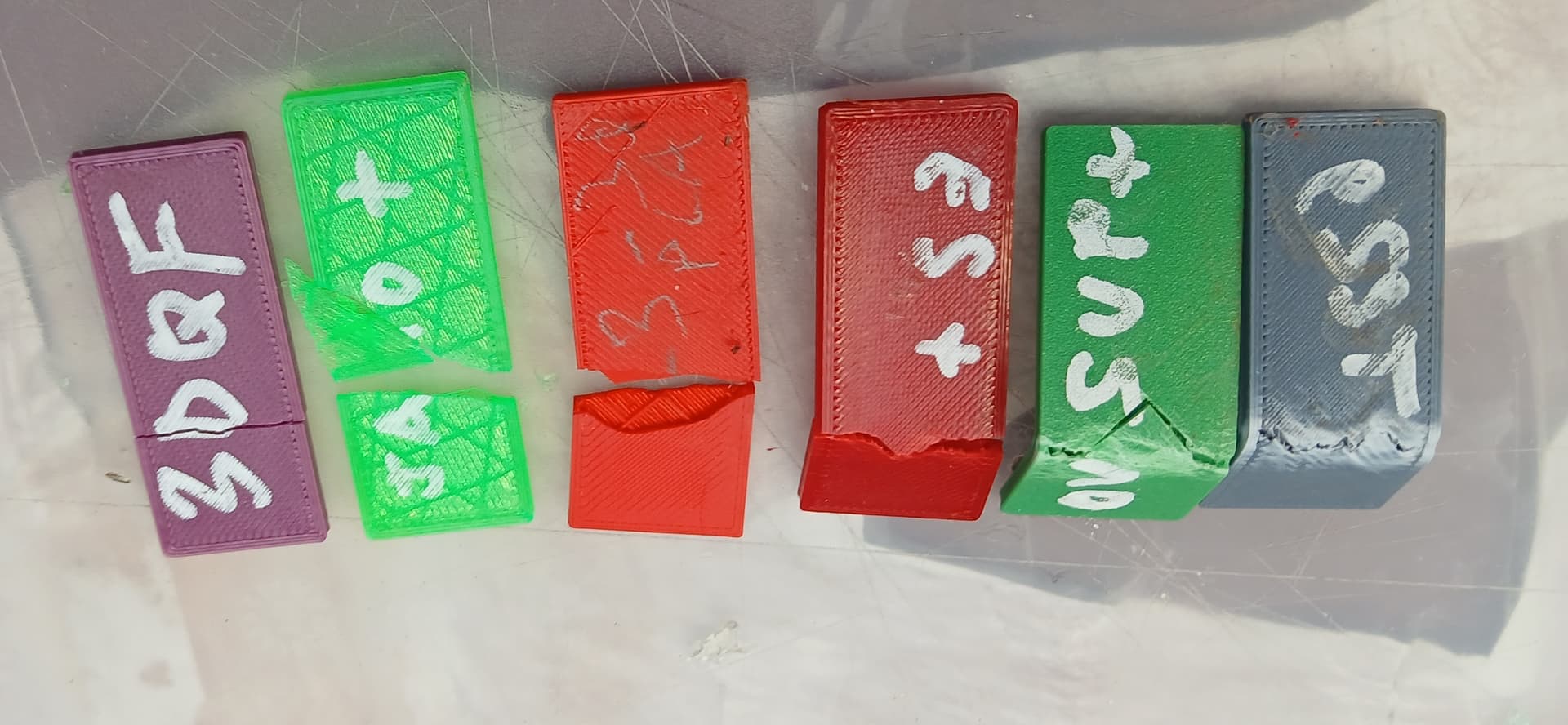
I tested 5 different PLA types with roughly the same method - printing a 50x20x2.5mm slab and sticking it in a vise, then hitting it with a carefully calibrated manual hammer blow to see what happened.
3DQF PLA
This is a really nice material, shown here in purple. It prints super nicely with no stringing, it’s supplied on a cardboard spool and made in the UK. However, this is a very “pure” not very modified PLA, it shattered with a fairly gentle tap.
Jayo PLA+
Shown here in light green, this was advertised as “PLA plus”, and is a super cheap brand. However, I was disappointed in general, I think it’s not very well made and again, it shattered with very little provocation. It could be slightly less brittle than the 3DQF but I might be imagining it.
123-3d PLA
This is “Jupiter PLA” from 123-3d, a popular NL/DE/UK supplier. It prints really nicely and the colours are great, very opaque. It did require noticably more encouragement to break but still shattered after a couple of hits. Shown here in the lighter red.
E-Sun PLA+
This is a very popular brand which generally prints very well and is available in lots of colours, shown here in the darker red. I have used the ESun PLA+ in robot parts before and it’s taken a bit of punishment. The ESun PLA+ required several hits of the hammer to break, then it still didn’t break fully cleanly, leaving a bit of material hanging on.
Overture Super PLA+
This is a new one for me, it’s really very good. Overture make it in lots of colours and the one here is darker green. It took several hammer blows like a champ, and still didn’t fully break, instead bending and turning white at the bend, similar to what ABS does.
E-Sun PLA-ST
Shown here in grey, this is the OG of tough PLA filaments. Much like the overture, it refused to break after multiple hits but did bend and go white. The disadvantage of the PLA-ST is that it’s only made in white, black and grey.
Conclusion
If you do decide to use PLA for a part of a robot which might get hit, use the PLA-ST or Overture Super PLA+. Anything else is much more likely to break. E-Sun PLA+ gets and “honourable mention” for being better than most of the rest
.
 . At least it’s decently thick around the front.